Sweet and Sour Pork Tenderloin
糖醋里脊
Description / 简介
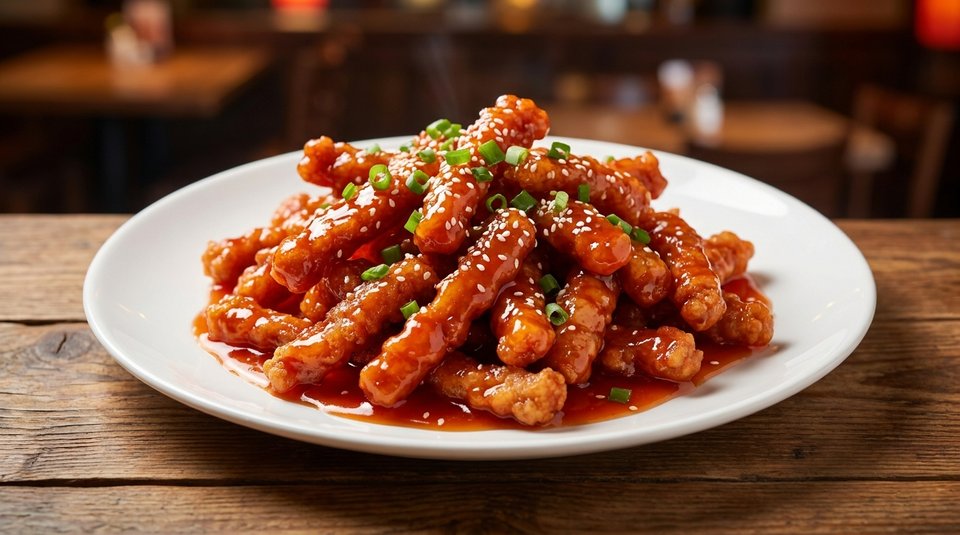
Sweet and Sour Pork Tenderloin (糖醋里脊) is one of the most beloved dishes in Chinese-American cuisine golden, double-fried pork tenderloin strips coated in a glossy, tangy-sweet sauce. The pork is shatteringly crisp on the outside yet tender and juicy within, while the sauce delivers that irresistible balance of bright acidity and caramel sweetness. A true crowd-pleaser that converts anyone on their first bite, this dish is the ultimate "rice killer" one plate is never enough.
Ingredients / 食材
Meat
- Pork tenderloin () 300g, cut into strips about 1cm 4cm
Batter
- Cornstarch () 60g
- All-purpose flour () 30g
- Egg 1 (egg white only for coating)
- Cold water 80ml
- Vegetable oil (for batter) 1 tsp
Sweet and Sour Sauce
- Tomato ketchup () 50g
- White sugar () 45g
- White vinegar () 30ml
- Light soy sauce () 10ml
- Cold water 60ml
- Cornstarch (for sauce thickening) 10g
Frying
- Vegetable oil () 500ml for deep frying
Garnish
- White sesame seeds () 3g (toasted)
- Scallions 10g (chopped)
Instructions / 制作过程
Step 1: Slice and Marinate the Pork Tenderloin
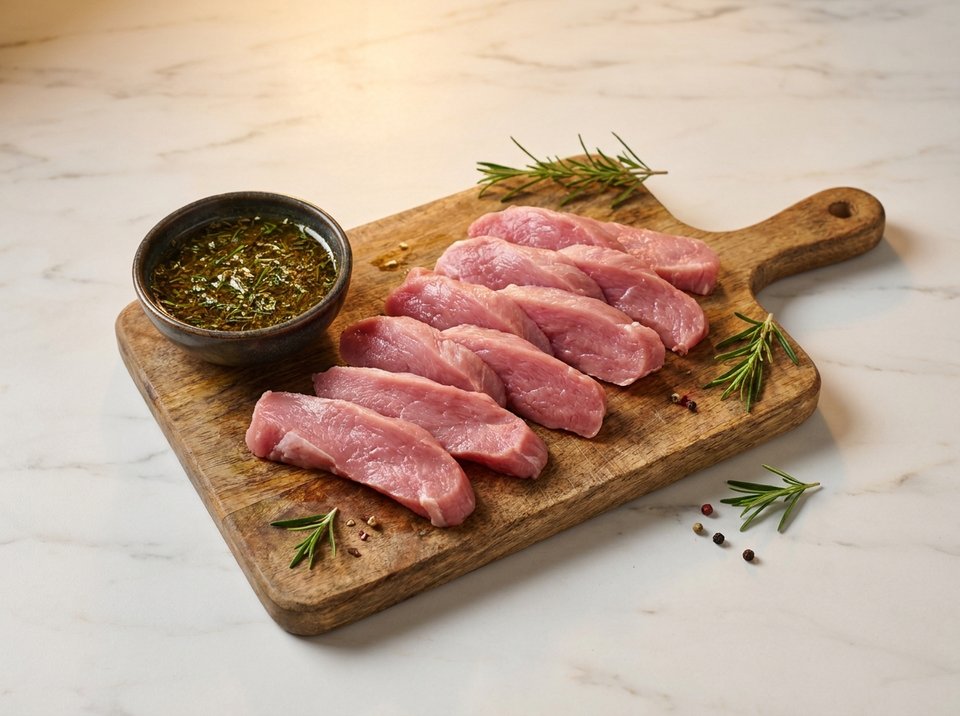
Select fresh pork tenderloin it should be pink, firm, and free of sinew. Cut the meat against the grain into strips approximately 1cm wide and 4cm long. Place the strips in a bowl and add: 1 tsp rice wine (), a pinch of salt, a pinch of white pepper, and 1 tsp light soy sauce. Mix thoroughly with your hands, making sure every strip is coated. Marinate for 15 minutes at room temperature. This step builds the savory base flavor that penetrates the meat and keeps it juicy under the hot oil.
Step 2: Make the Batter and Coat the Strips
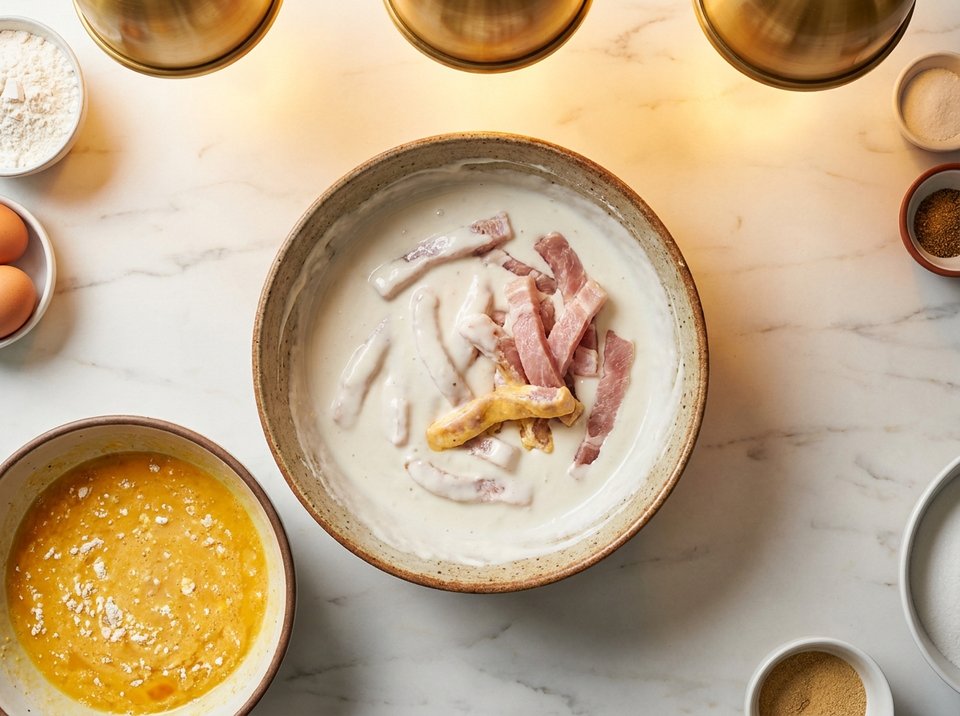
In a large mixing bowl, combine cornstarch and flour. Add cold water gradually while whisking to create a smooth, thick batter the consistency of thin yogurt it should coat the back of a spoon. Stir in 1 tsp of vegetable oil, which gives the fried coating a better sheen and helps it stay crispy longer. Add the marinated pork strips and toss with clean hands until every piece is evenly coated in the thick batter. The batter should cling without being lumpy or too dry. Set aside and let rest for 5 minutes this allows the starch to hydrate and the coating to adhere better during frying.
Step 3: First Fry Establish the Base
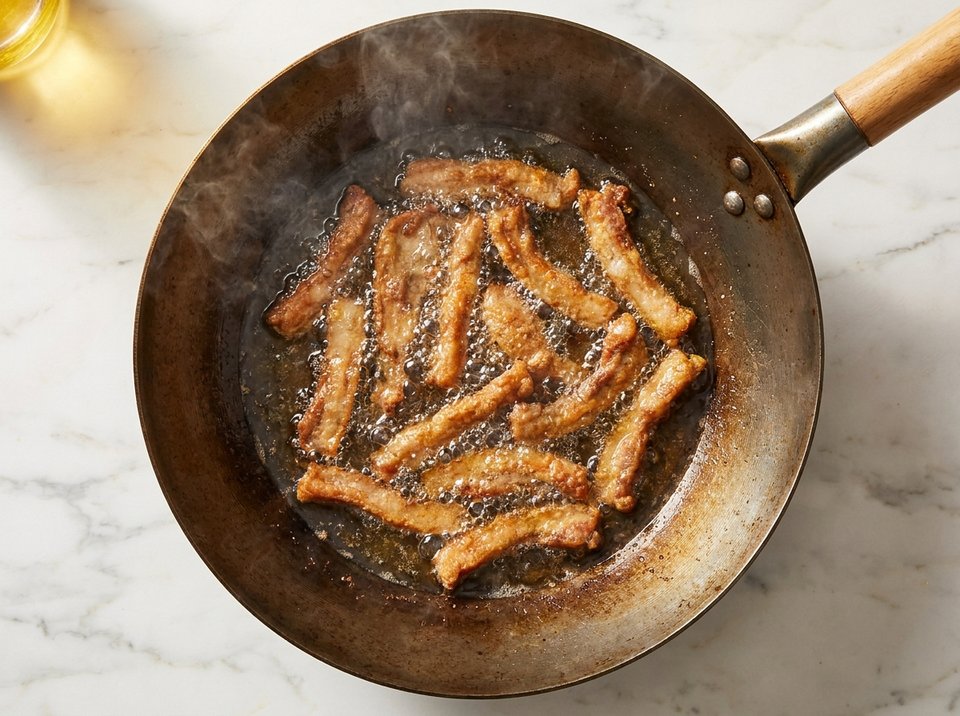
Heat 500ml of vegetable oil in a wok or deep heavy-bottomed pot to exactly 170C (340F) test by dropping a tiny bit of batter into the oil; if it sizzles and floats immediately with bubbles around it, the oil is ready. Carefully add the coated pork strips one by one using tongs or chopsticks, making sure they don't stick together. Fry at medium heat for 45 minutes, until the batter is set and turns pale golden. The first fry cooks the meat through and sets the coating. Using a spider or slotted spoon, remove the pork and drain on a wire rack. Do not crowd the wok fry in two batches if needed.
Step 4: Second Fry Achieve Ultimate Crispiness
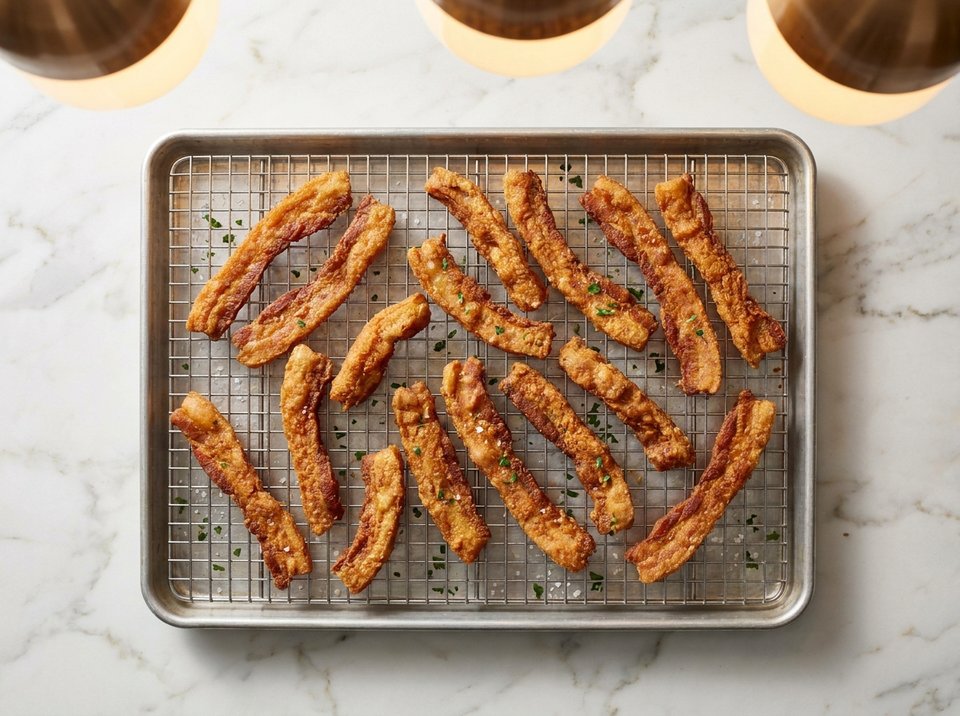
This is the most important step for achieving the signature "crunch heard across the table." Reheat the oil to 190C (375F). Carefully add the pale-golden pork strips from the first fry. The intense heat will instantly puff and crisp the coating, turning it deep golden in just 3045 seconds. Stir gently to ensure even coloring. Remove immediately and drain on a wire rack do not drain on paper towels, which trap steam and make the coating soggy. The double-fry technique is what creates that shatteringly crisp exterior while keeping the inside juicy.
Step 5: Make the Sweet and Sour Sauce
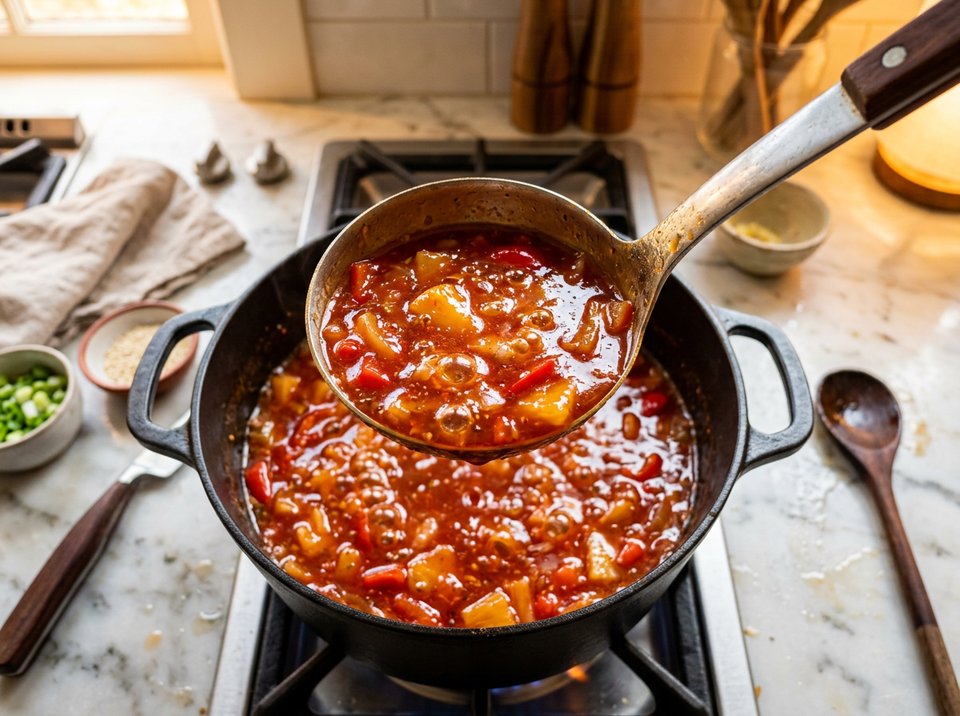
While the pork is draining, make the sauce. In a small bowl, whisk together tomato ketchup, sugar, white vinegar, light soy sauce, and cold water until the sugar fully dissolves. In a separate small cup, dissolve 10g cornstarch in 2 tbsp cold water to make a slurry this is your thickening agent. Heat a clean wok over medium-low heat, pour in the sauce mixture, and bring to a gentle simmer, stirring constantly. Add the cornstarch slurry and stir until the sauce turns glossy and thick enough to coat a spoon about 2 minutes. The sauce should be bright red-orange, shiny, and bubbling gently. Remove from heat immediately.
Step 6: Toss, Coat, and Serve
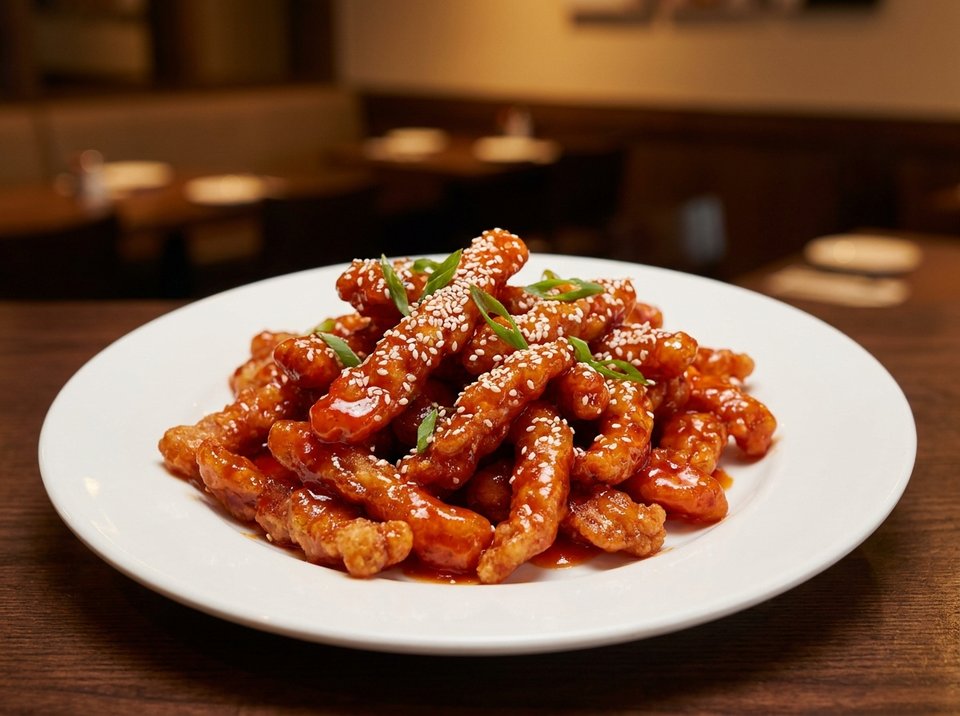
Return the wok with the sauce to high heat. Add the hot double-fried pork strips and toss vigorously with a large spatula, making sure every strip gets fully coated in the glossy sauce within seconds. Work quickly you want the sauce to cling and caramelize slightly on the hot pork without the coating going soft. Transfer to a serving plate immediately. Scatter toasted white sesame seeds and chopped scallions over the top for color and aroma. Serve at once with steamed white rice the contrast of crispy, saucy pork against plain rice is what makes this dish so addictive.
Tips
- Double-fry is non-negotiable: The first fry at 170C cooks the interior and sets the base; the second fry at 190C creates the shatteringly crisp outer shell. Skipping the second fry gives you soft, soggy coating instead of crunch this is the single most important technique in the recipe.
- The sweet and sour ratio is 3:2:1: Tomato ketchup : sugar : vinegar = 3:2:1 by volume gives a balanced, authentic flavor. Too much vinegar and it stings; too much sugar and it cloys. Adjust the ketchup to make it tangier, or vinegar to make it brighter.
- Use a wire rack, not paper towels, to drain fried pork: Paper towels trap steam underneath the food, turning your carefully fried coating from crisp to soft in under a minute. A wire rack lets air circulate freely on all sides.
- Serve immediately, not ahead: The sauce will begin to soften the crispy coating within minutes. This dish must be plated and served right away it is not a dish you can prep ahead or hold, which is exactly why it tastes so good in restaurants the moment it hits the table.
FAQ
Q1Should I use pork tenderloin or pork loin for this dish?
APork tenderloin is the better choice it's lean and very tender, making it perfect for quick searing. Pork loin works too but can be slightly tougher. Either way, slice against the grain into thin strips (about 1cm thick) for the most tender result.
Q2Why isn't my sauce thick enough / why did it come out too thin?
AThe sauce needs to be reduced properly before adding the cornstarch mixture. Make sure your heat is high enough when thickening, and pour the cornstarch slurry in gradually while stirring. If it's still thin, the pork was likely too wet before coating pat the slices very dry before breading.
Q3What does double-frying do and can I skip it?
ADouble-frying is what gives the pork its shatteringly crisp crust that stays crunchy even in the sauce. First fry at 170C to cook through, second fry at 190C to set and expand the coating. Skipping the double-fry means a soft, soggy coating the moment the sauce hits it.
Q4Can I use chicken instead of pork?
AYes chicken breast or thigh works well. Slice into thin strips and follow the same coating and frying process. Chicken takes slightly less time to cook through, so adjust the first fry to 23 minutes instead of 4.
Q5How do I get that restaurant-quality glossy sauce?
AThe key is a proper reduction. After mixing the sauce ingredients, bring it to a boil first to activate the cornstarch, then reduce to a simmer until it coats a spoon. The moment you add the fried pork, toss everything together quickly so every piece gets coated without the sauce breaking.