Yangzhou Fried Rice
扬州炒饭
Description / 简介
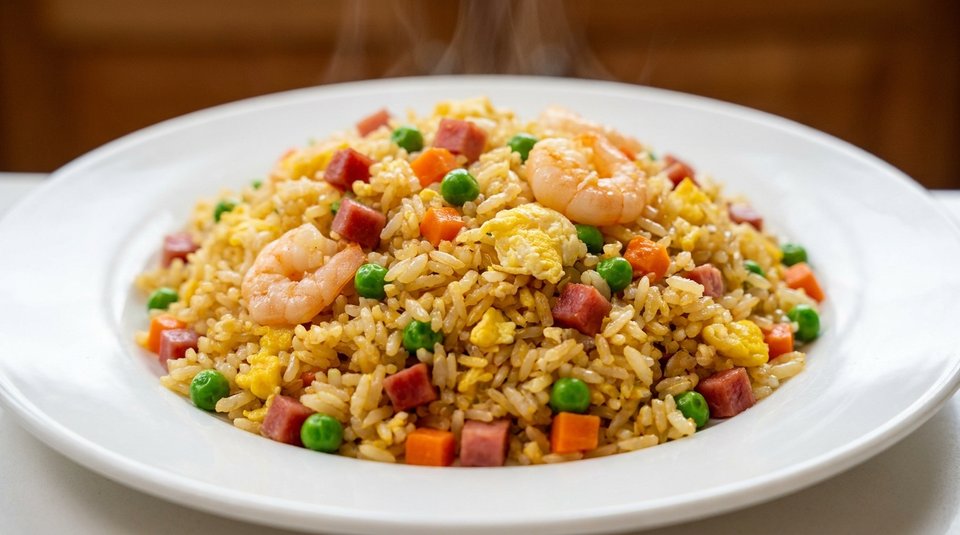
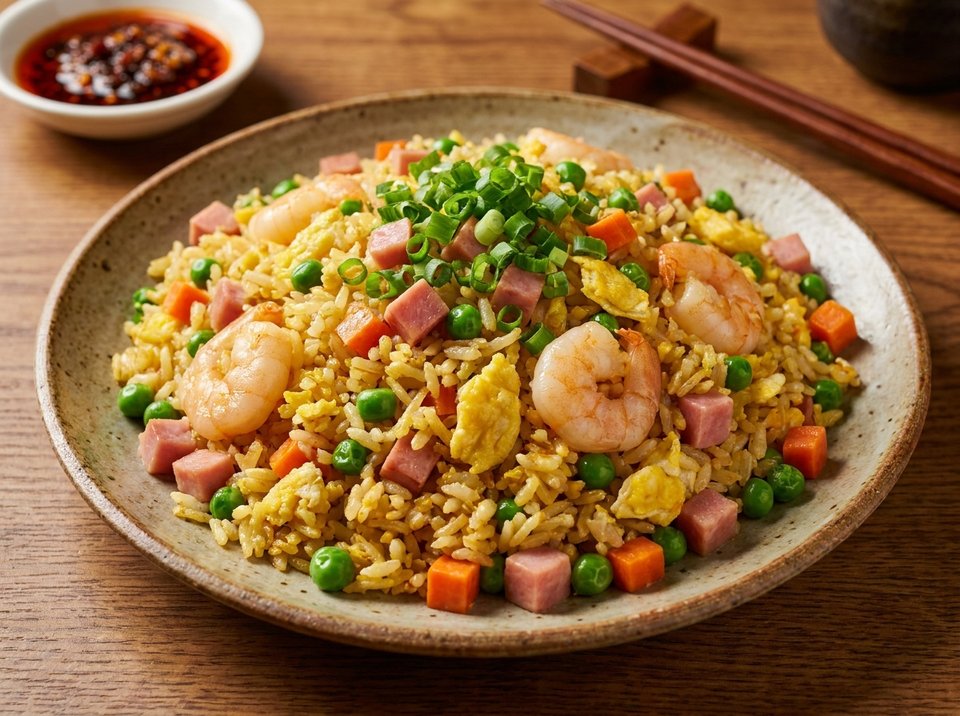
Yangzhou Fried Rice (扬州炒饭) is China's most famous fried rice a vibrant, colorful wok masterpiece from Jiangsu Province featuring golden egg-coated rice studded with diced ham, succulent shrimp, sweet peas, and carrots. The secret to its legendary status lies in the wok-hei () the breath of the wok achieved through high-heat, fast tossing that gives every grain its own distinct flavor. A staple in Chinatowns worldwide, this is the dish that defines what Chinese fried rice can be at its be
Ingredients / 食材
Day-old jasmine rice 400g, cold and dry
Eggs 3 (beaten)
Chinese ham 50g, diced into small cubes
Shrimp 60g, peeled and deveined
Green peas 40g, fresh or frozen
Carrot 30g, diced into small cubes
Scallions 15g, chopped
Vegetable oil 40ml
Salt 3g
Light soy sauce 5ml
White pepper 1g
Instructions / 制作过程
Step 1: Prep All Ingredients
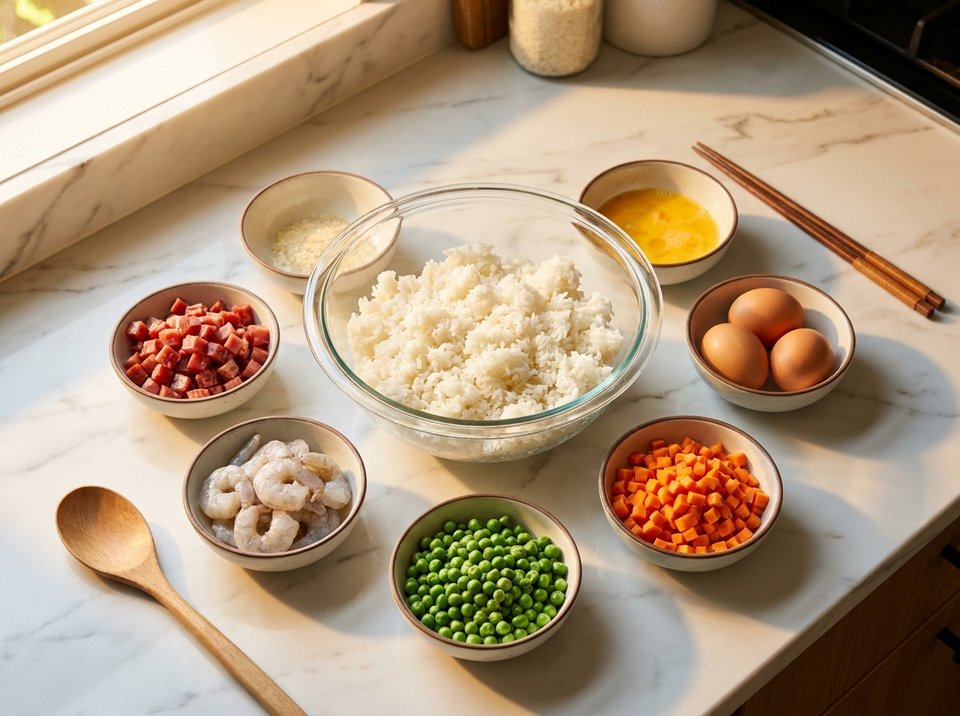
Mise en place is everything in fried rice every ingredient must be ready before the wok goes on the flame. Dice the Chinese ham into small cubes (about 5mm). Peel and devein the shrimp if needed, then pat dry with paper towels. If using fresh peas, blanch them in boiling water for 1 minute and drain. Dice the carrot into small cubes the same size as the peas. Beat the eggs in a small bowl until uniform. Have the cold day-old rice ready if the rice is clumped, break it apart with your hands or a fork before cooking. Keep all ingredients in separate small bowls within arm's reach. This mise en place step is not optional fried rice moves fast and there is no time to prep while the wok is hot.
Step 2: Scramble the Eggs
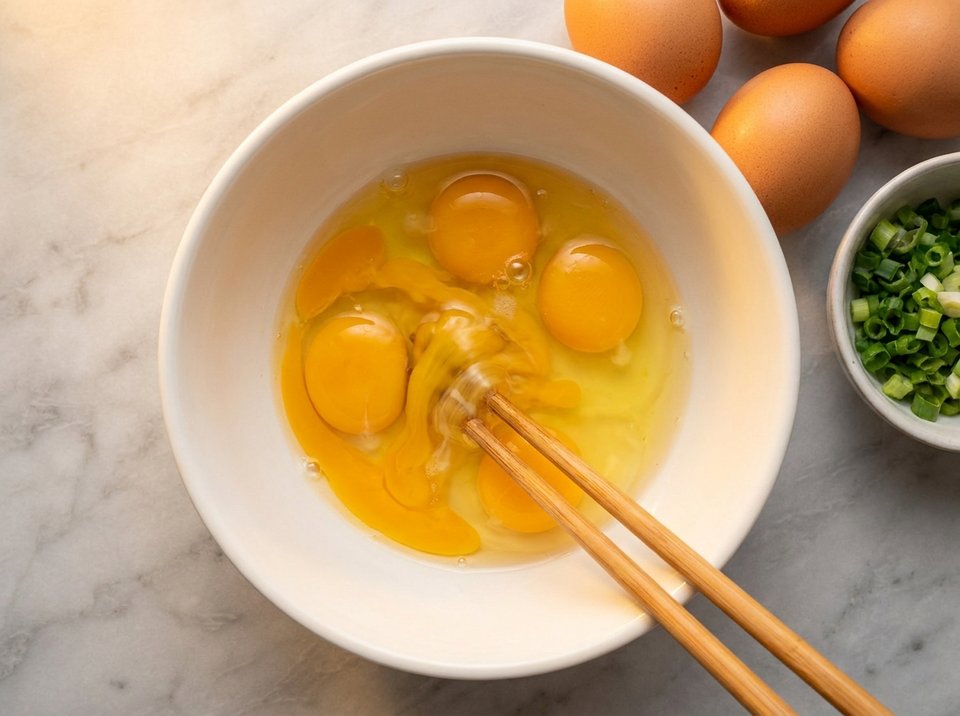
Heat 15ml of oil in a wok over medium-high heat until shimmering. Pour in the beaten eggs and let them set for 10 seconds without stirring. Then, using a spatula, gently push the eggs toward the center, forming large, fluffy soft curds. When the eggs are just set but still slightly wet, remove from wok and set aside. The eggs should be pale golden and just cooked through not browned. They will return to the wok at the very end and finish cooking with the rice, so slightly underdone is perfect here.
Step 3: Stir-Fry the Savory Mix-Ins
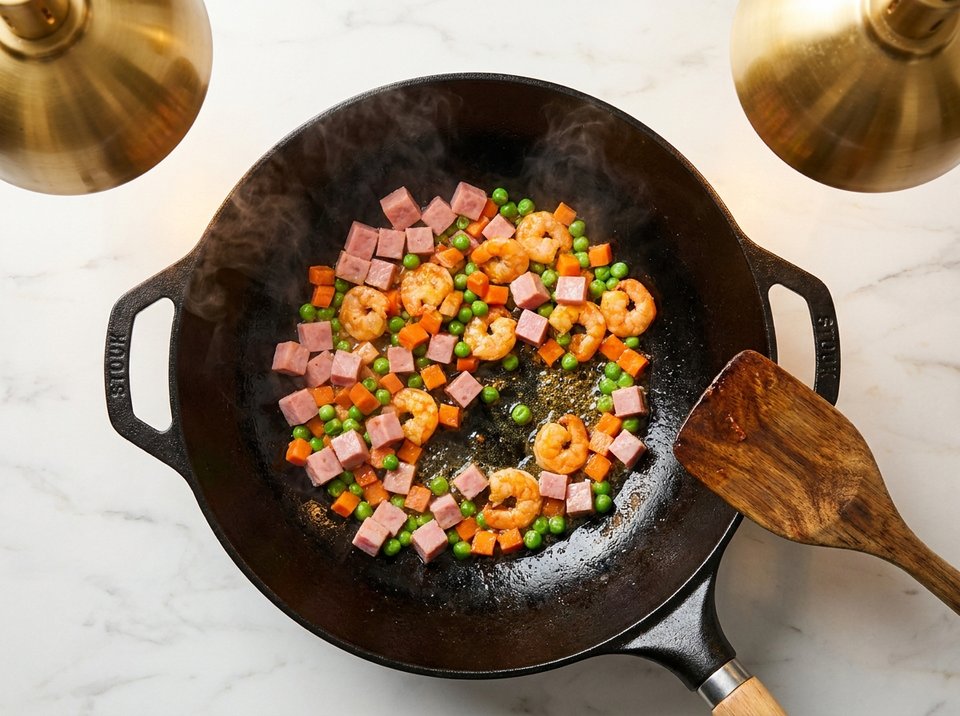
In the same wok over high heat, add another 10ml of oil. When it shimmers, add the diced ham first and stir-fry for 30 seconds the ham's fat will render and release its deep, savory aroma. Add the shrimp next and stir-fry for 1 minute until they turn pink and curl. Add the carrots and peas, stir-frying for another 12 minutes until the carrots brighten and the peas are heated through. Season lightly with a pinch of salt. Remove all the savory mix-ins from the wok and set aside in a bowl.
Step 4: Wok-Fry the Rice
Increase heat to the highest possible. Add the remaining 15ml of oil to the wok you should see a shimmer. Add the cold day-old rice and spread it in a single layer across the wok surface. Leave it undisturbed for 30 seconds to let the bottom surface caramelize slightly. Then, using the spatula, toss and stir the rice vigorously, breaking apart any remaining clumps. Continue tossing over high heat for 34 minutes until every grain is heated through and begins to lightly char. You should hear a satisfying sizzle and see steam rising. The wok's breath (wok-hei) is developing now this high heat is essential.
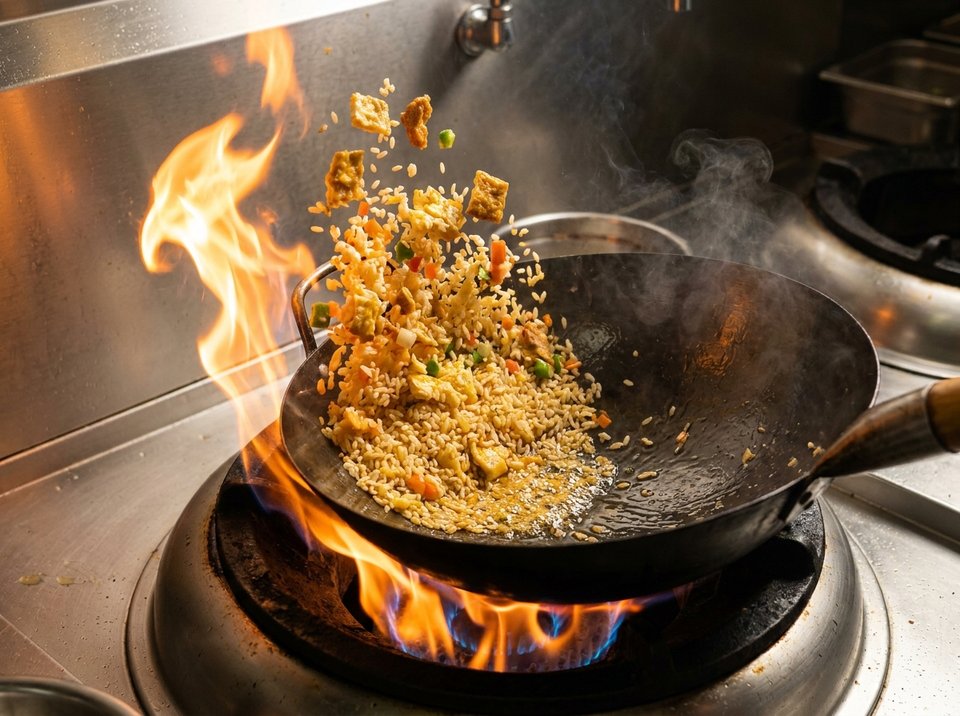
Step 5: Combine, Season, and Plate
Return the egg and all the savory mix-ins (ham, shrimp, peas, carrots) to the wok with the rice. Toss everything together over high heat for 12 minutes until fully combined. Add light soy sauce and white pepper along the edge of the wok (not directly on the rice), then toss to distribute evenly. The soy sauce caramelizes on the hot wok surface before mixing, adding depth without making the rice wet. Turn off the heat, scatter the chopped scallions, and give one final toss. Transfer to a plate immediately and serve hot. The ideal Yangzhou Fried Rice has rice grains that are distinct and separate, each coated in a thin sheen of egg and fat, with no soggy or burnt patches.
Tips
- Day-old rice is essential, not optional: Freshly cooked rice contains too much moisture and will turn into a sticky paste under high wok heat. Refrigerate day-old rice overnight the surface moisture evaporates, the starch firms up, and each grain holds its shape when stir-fried. If you must rush, spread hot freshly cooked rice on a tray and fan it dry for 15 minutes before cooking.
- High heat and speed are the soul of fried rice: A common mistake is cooking fried rice over medium heat. You need the wok screaming hot the rice should be bouncing in the wok as you toss, and you should hear a loud sizzle. Lower heat gives you mushy, greasy fried rice. Work fast: once the rice is in the wok, the entire frying process should take no more than 5 minutes.
- Egg coating technique the Yangzhou signature: In classic Yangzhou fried rice, half the egg is beaten into the rice before frying (for coating) and the other half is scrambled separately. This double-egg technique gives each grain a golden sheen while also providing fluffy egg curds throughout the dish. Try both methods and see which you prefer.
- Keep ingredients bite-sized and uniform: All the mix-ins (ham, shrimp, peas, carrots) should be cut to approximately the same small size about 5mm cubes. This ensures even cooking and makes every forkful a balanced mix of ingredients, rather than one forkful all shrimp and the next all carrot.
FAQ
Q1 What rice is best for fried rice fresh or day-old?
ADay-old rice is essential. Freshly cooked rice is too moist and sticky, causing clumps instead of separate grains. Spread cooked rice on a plate and refrigerate uncovered for at least 2 hours (overnight is even better) the surface dries out and each grain stays perfectly distinct during frying.
Q2 Why does my fried rice turn out mushy instead of fluffy?
ATwo causes: too much water in the rice (use day-old rice) and overcrowding the wok. When you crowd the wok, the rice steams instead of fries. Use the largest heat possible and cook in small batches so the wok stays hot enough to sear, not steam.
Q3 What gives Yangzhou fried rice its signature "wok hei"?
AWok hei () is that smoky, charred flavor from extreme wok heat. The key is the hottest possible flame, a well-seasoned carbon steel wok, and keeping everything moving. A home stove can never match a restaurant wok burner, but using the highest heat and cooking fast gets you close.
Q4 Can I make this without a wok?
AYes a large heavy skillet or cast iron pan works. The goal is maximum surface heat, so preheat your pan until it smokes, then work in small batches. The results won't have true wok hei, but can still be very good.
Q5 What can I substitute for char siu (roast pork)?
ADiced ham, Chinese sausage (lap cheong), or even plain cooked chicken thigh all work. The key is using something with a bit of fat and savory depth lean chicken breast alone will taste bland by comparison.