Sweet and Sour Pork Ribs
糖醋排骨
Description / 简介
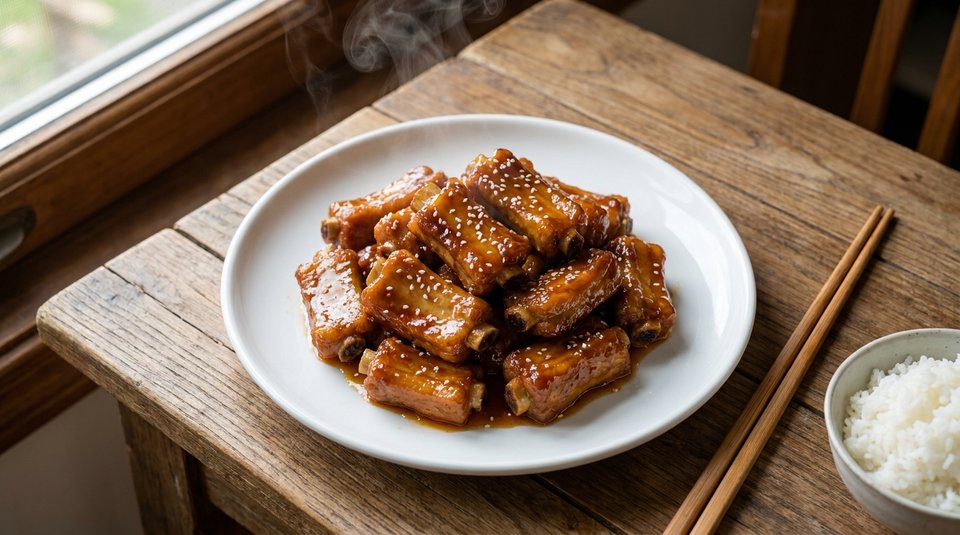
Sweet and Sour Pork Ribs (糖醋排骨) is a beloved classic from Shanghai and the broader Jiangnan region a dish that transforms humble pork short ribs into something truly magnificent through the alchemy of caramelized sugar and aged vinegar.
Ingredients / 食材
Pork short ribs (ribs) 500g (cut into 34cm pieces)
Rice vinegar or black vinegar 30ml (2 tbsp)
Light soy sauce 20ml (1.5 tbsp)
Dark soy sauce 10ml (1 tsp)
Rock sugar 30g (or light brown sugar)
Chinese cooking wine 20ml (1.5 tbsp)
Sugar 15g (1 tbsp)
Fresh ginger 10g (3 slices)
Scallions 2 stalks
Salt 3g
Water 400ml
White sesame seeds 3g (for garnish)
Neutral cooking oil 30ml (2 tbsp)
Instructions / 制作过程
Step 1: Soak and Blanch the Ribs
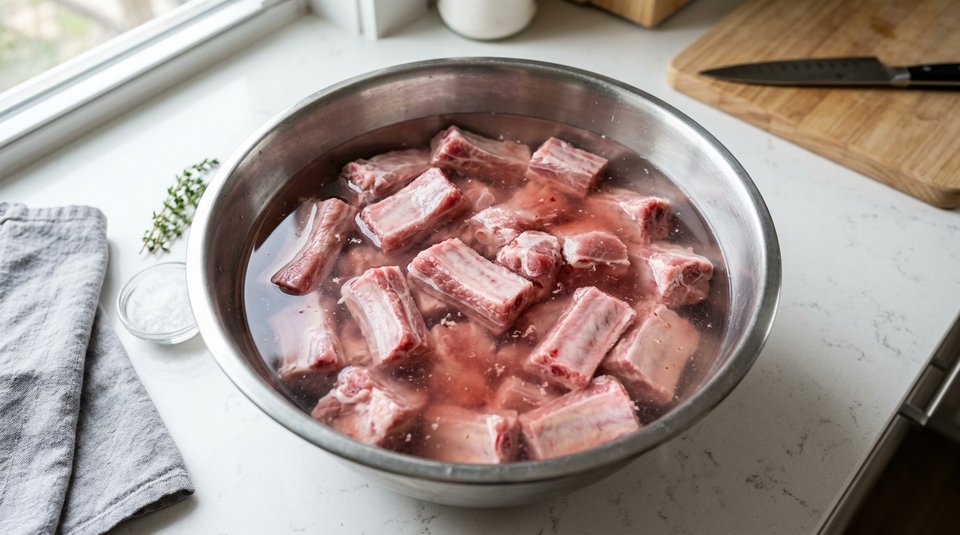
Place the pork short ribs in a large bowl of cold water and soak for 20 minutes this draws out blood and impurities from the bone marrow, which is the key first step for clean, sweet-tasting ribs. Drain, then blanch: place ribs in a pot of cold water with 2 slices of ginger and 1 stalk of scallion. Bring to a boil over high heat, then simmer for 3 minutes. Drain and rinse under cold water to stop the cooking, then pat completely dry with kitchen paper towels. This step removes gamey flavors and ensures the ribs taste pure and sweet rather than muddy.
Step 2: Stir-Fry Until Golden and Fat-Rendered
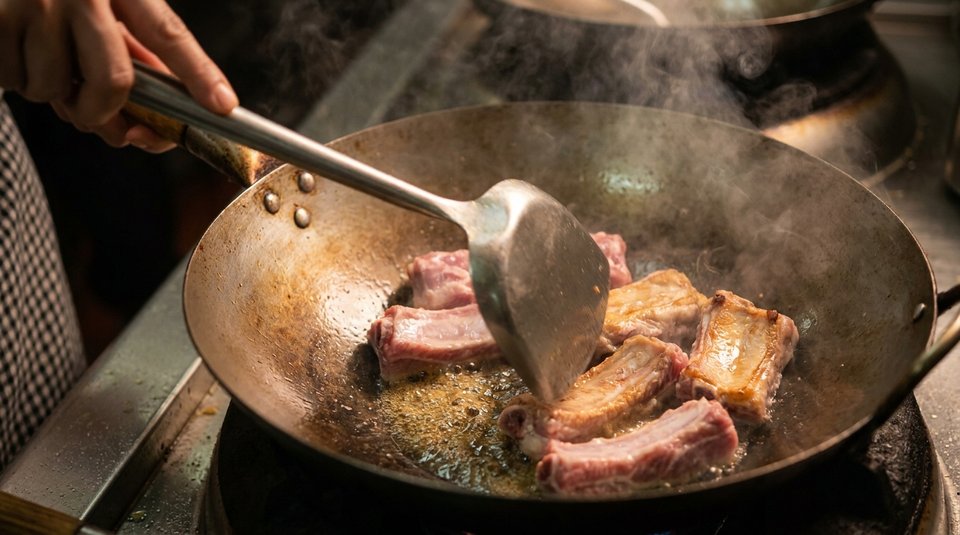
Heat 30ml of neutral oil in a wok over medium-high heat until shimmering. Add the blanched, dried ribs and stir-fry for 57 minutes, turning frequently with a spatula. The goal is to render the fat from the ribs and build a light golden crust on the outside this Maillard reaction creates the savory depth that underlies the sweet-sour glaze. The ribs should sizzle actively throughout. When the meat turns golden and the fat has visibly reduced, add the remaining ginger slices and scallion. Stir-fry for another 30 seconds until fragrant. Do not skip this step: properly rendered and browned ribs are the difference between great and mediocre .
Step 3: Braise in Sweet and Sour Sauce
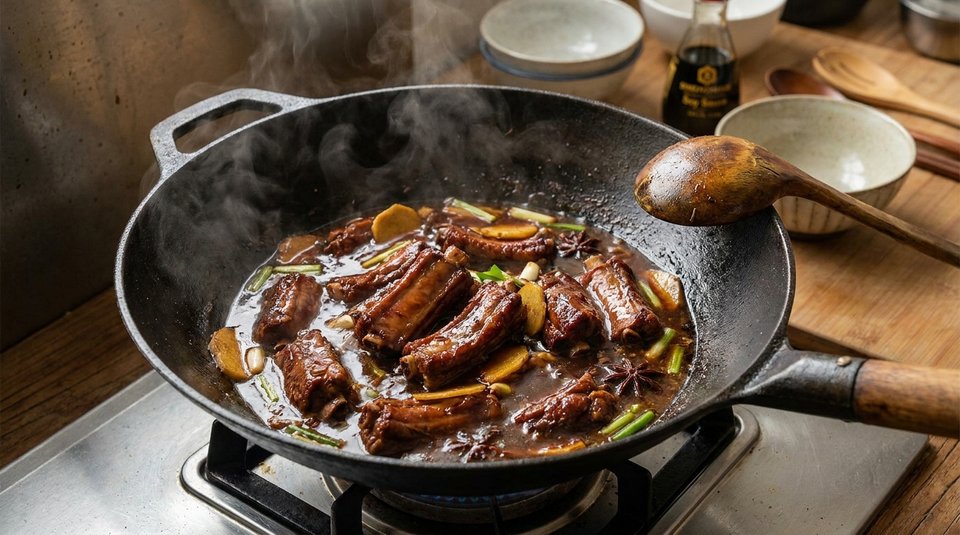
Add 400ml of water, light soy sauce, dark soy sauce, cooking wine, and 15g of regular sugar directly to the wok with the fried ribs. Bring to a boil over high heat, then immediately reduce to medium-low. Partially cover and braise for 2530 minutes, turning the ribs once halfway through. During this time the meat will become tender, the bones will release their marrow, and the braising liquid will reduce and intensify in flavor. Check every 10 minutes to ensure the liquid hasn't boiled off add a splash of hot water if needed to keep the ribs mostly submerged.
Step 4: Add Rock Sugar and Build the Glaze
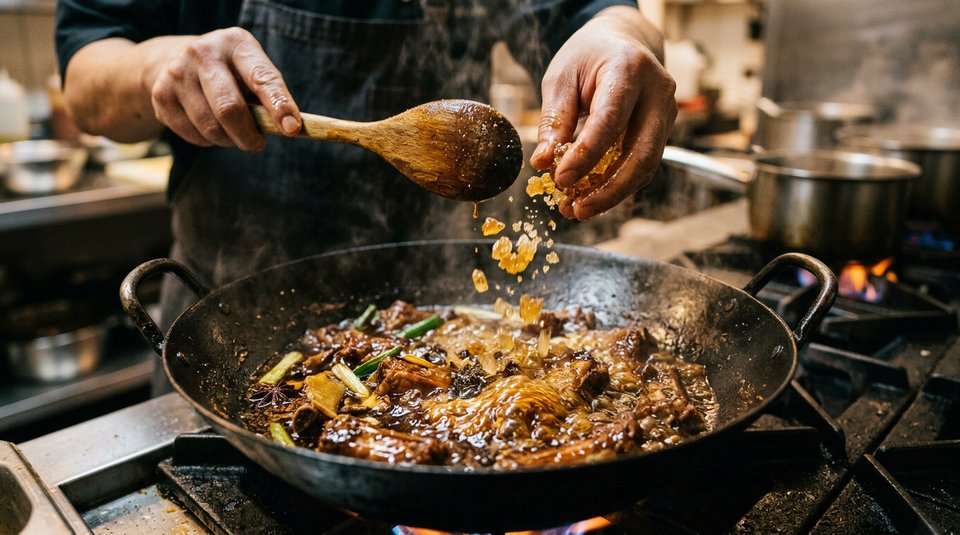
After 25 minutes, the braising liquid should have reduced to about 1/3 of its original volume. Now add the rock sugar (crush large pieces if using) and stir it in. Increase heat to medium and continue cooking for 810 minutes, stirring occasionally. The rock sugar will melt and caramelize, turning the braising liquid from dark brown into a luminous amber glaze. As the liquid reduces further, it will become thick and syrupy, coating every surface of the ribs. This is the defining moment of the dish patience here means the difference between ribs that look glossy and restaurant-worthy versus dull and unremarkable.
Step 5: Final Vinegar Toss and Plate
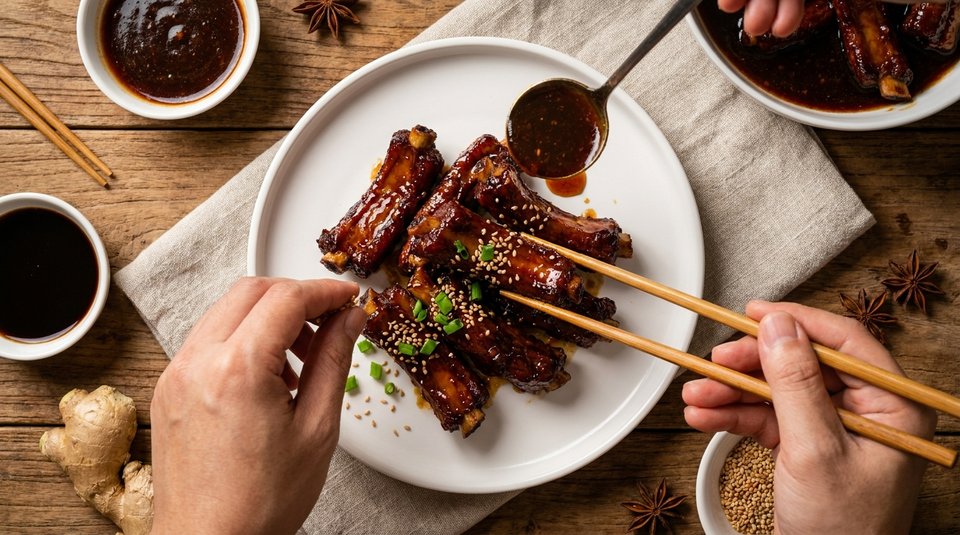
Remove the lid and increase heat to high. Add the rice vinegar/black vinegar in one pour the brief high-heat contact with the acid brightens the flavor profile and adds a sharp, clean sour note that cuts through the richness. Toss and stir continuously for 23 minutes as the sauce reduces to a thick, sticky glaze that clings to every rib. The sauce should coat the back of a spoon. Turn off the heat the moment the ribs look lacquered and deeply amber. Arrange on a plate, sprinkle with white sesame seeds, and serve immediately over steamed rice. The glaze will continue to set as it cools, forming a slightly crisp shell around the tender meat.
Tips
- Choose the right ribs: Use pork short ribs or pork ribs with meat about 3cm long per piece. Avoid boneless ribs; the bone adds flavor and helps the meat stay juicy during braising.
- Don't skip the blanch: Blanching removes blood from the bone marrow cavity. Skipping it means your final dish will have a muddy, gamey undertone no amount of vinegar can fully fix.
- Rock sugar vs. white sugar: Rock sugar () gives a cleaner, more translucent glaze with a subtle honey note. White or brown sugar works in a pinch but produces a slightly duller color.
- Two additions of vinegar: Adding vinegar in two stages once during braising and once at the end creates a more complex sour profile than a single addition. Don't add all the vinegar at the beginning or the meat won't braise properly.
FAQ
Can I use pork spare ribs instead of short ribs?
Yes, pork spare ribs work well and are often more flavorful. Cut into similar-sized pieces (34cm) and adjust braising time to 3540 minutes since spare ribs are larger.
Why are my ribs tough instead of tender?
The most common cause is not braising long enough. Short ribs need at least 25 minutes of gentle simmering to break down the collagen. Also ensure you added enough water to cover the meat during braising.
Can I make this ahead?
Absolutely the flavors develop overnight. Refrigerate the cooked ribs in their sauce and reheat over medium heat. The ribs actually taste better the next day as the sauce penetrates deeper into the meat.
What can I substitute for rock sugar?
Light brown sugar or golden syrup are the best substitutes. They caramelize similarly and add a warm sweetness. Avoid dark brown sugar, which has a strong molasses flavor that overpowers the dish.
How do I get a deeper red color on the ribs?
Add 1 tsp of ketchup or tomato paste along with the dark soy sauce in Step 3. This is a common restaurant trick that adds a rich red tone without changing the flavor.