Henan Lamb Noodle Soup (烩面)
烩面
Description / 简介
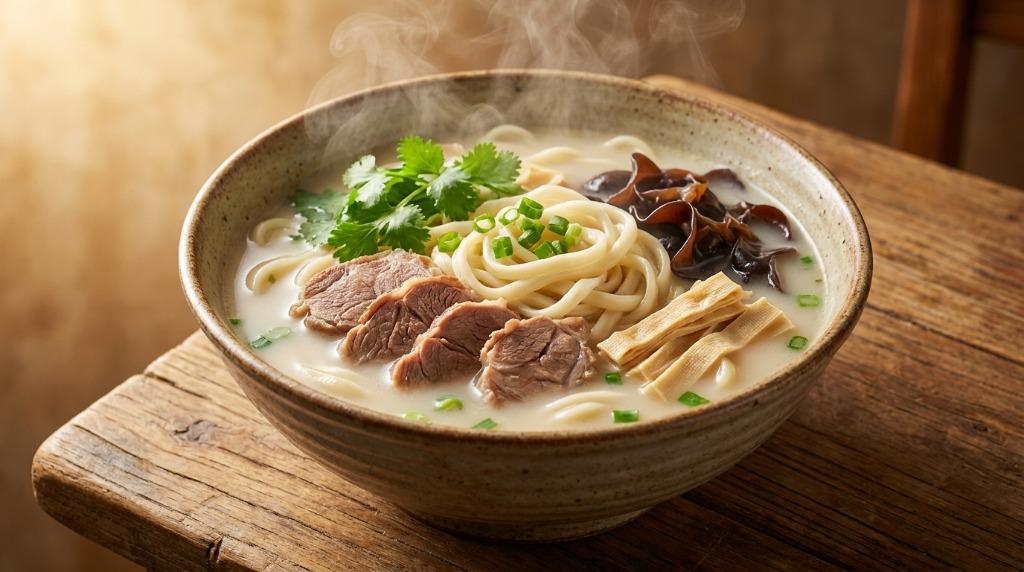
Henan Lamb Noodle Soup (烩面) is one of China's most celebrated regional noodles and a true icon of 中原饮食文化. Revered as one of the "Top 10 Noodles of China," this soul-warming dish features wide hand-pulled noodles swimming in a rich, milky lamb bone broth, loaded with tender lamb slices, silky tofu skin, crisp sea mustard, chewy glass noodles, and earthy wood ear mushrooms. The broth — slow-simmered for hours until deeply fragrant — is the heart and soul of the dish, while the noodles are hand-pul
Ingredients / 食材
High-gluten flour 300g
Lukewarm water 150ml
Salt 5g
Baking soda 1g (optional, for extra chewiness)
Lamb leg bones 800g
Lamb shoulder meat 300g
Fresh ginger 20g (sliced)
Green onions 15g (cut into segments)
Rice wine 15ml
Star anise 2 pieces
Cinnamon stick 1 small piece
Bay leaves 2 pieces
White pepper powder 3g
Sea mustard 50g (soaked and shredded)
Tofu skin 1 sheet (cut into strips)
Glass noodles 30g (soaked in warm water)
Wood ear mushrooms 10g (soaked and torn)
Coriander 15g (chopped)
Scallions 10g (chopped)
Chili oil 10ml (optional)
Sesame oil 3ml
Instructions / 制作过程
Step 1: Prepare and Simmer the Lamb Broth
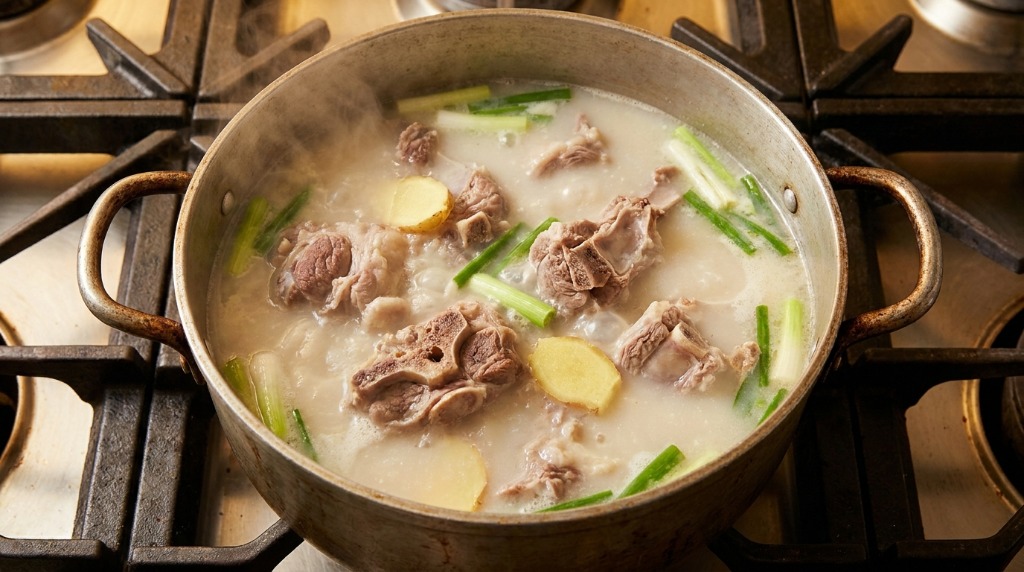
Place the lamb bones and lamb meat in a large pot, cover with cold water, and bring to a rolling boil over high heat. Add 10ml of rice wine and 10g of sliced ginger, then skim off all the foam and impurities that rise to the surface. Drain and rinse the bones and meat under warm water, scrubbing off any clinging residue. Return the clean bones and meat to a clean pot, add 2500ml of fresh cold water, and bring to a boil over high heat. Add the remaining ginger slices, green onion segments, star anise, cinnamon stick, and bay leaves. Reduce heat to low and simmer gently for 2–2.5 hours until the broth turns a rich, milky white and the lamb is fall-off-the-bone tender. Season with 5g of salt and 2g of white pepper powder. Remove the lamb, let it cool, then slice into thin pieces. Strain the broth through a fine-mesh sieve and keep it hot. The broth is the soul of 烩面 — take your time with this step and resist the urge to rush.
Step 2: Make and Rest the Dough
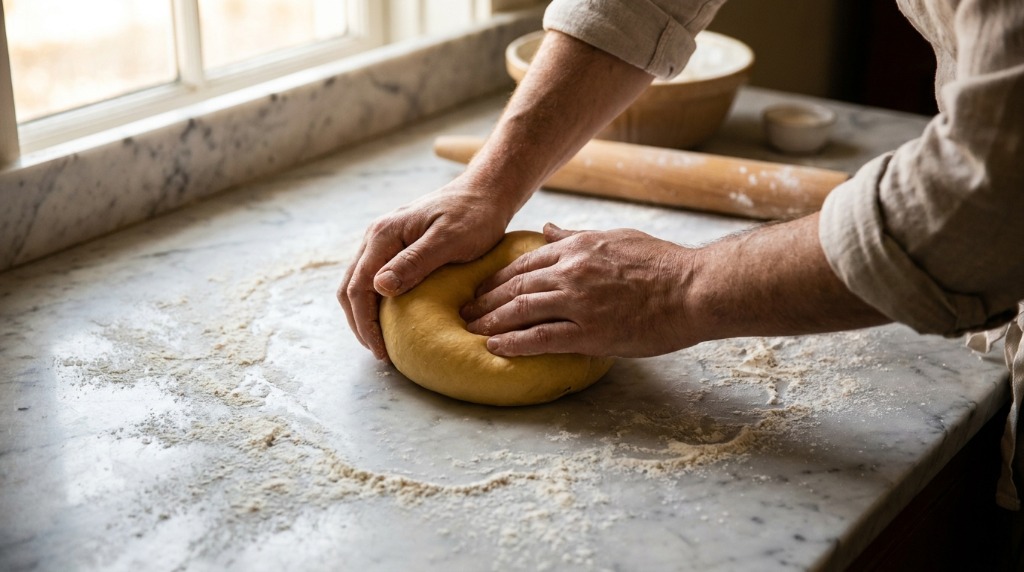
In a large mixing bowl, combine the high-gluten flour, salt, and baking soda (if using). Pour in the lukewarm water gradually, stirring with chopsticks as you go until a shaggy dough forms. Switch to hand-kneading, working the dough for 6–8 minutes until it is smooth, firm, and slightly tacky. The dough should feel like soft clay — not sticky, not dry. Cover the bowl with a damp cloth and rest for 30 minutes. After resting, divide the dough into 6 equal portions. Roll each portion into a long oval or tongue shape about 0.5cm thick using a rolling pin. Brush the surface generously with vegetable oil and stack the oiled sheets together on a plate. Cover and rest for another 60–90 minutes. This extended resting period is non-negotiable — it allows the gluten to fully relax, making the dough pliable enough to pull into wide, silky noodles without snapping back or tearing.
Step 3: Prep the Toppings
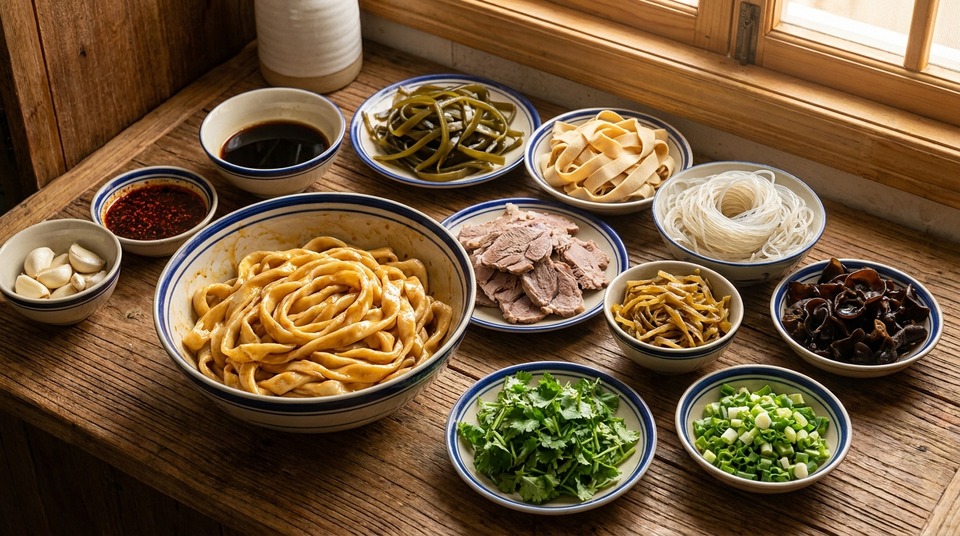
While the dough rests, prepare all the toppings. Soak the glass noodles in warm water for 20 minutes until soft, then drain. Soak the wood ear mushrooms separately until plump, then tear into bite-sized pieces. Soak the sea mustard in warm water for 15 minutes, rinse well, and cut into thin strips. Blanch the tofu skin strips in boiling water for 30 seconds to remove the beany flavor, then drain. If using lamb meat from the broth, slice it thin. Rinse and chop the coriander and scallions. Arrange all toppings in separate small bowls so they're ready to go when assembly begins. Having everything prepped and within reach makes the final assembly smooth and stress-free.
Step 4: Pull the Noodles
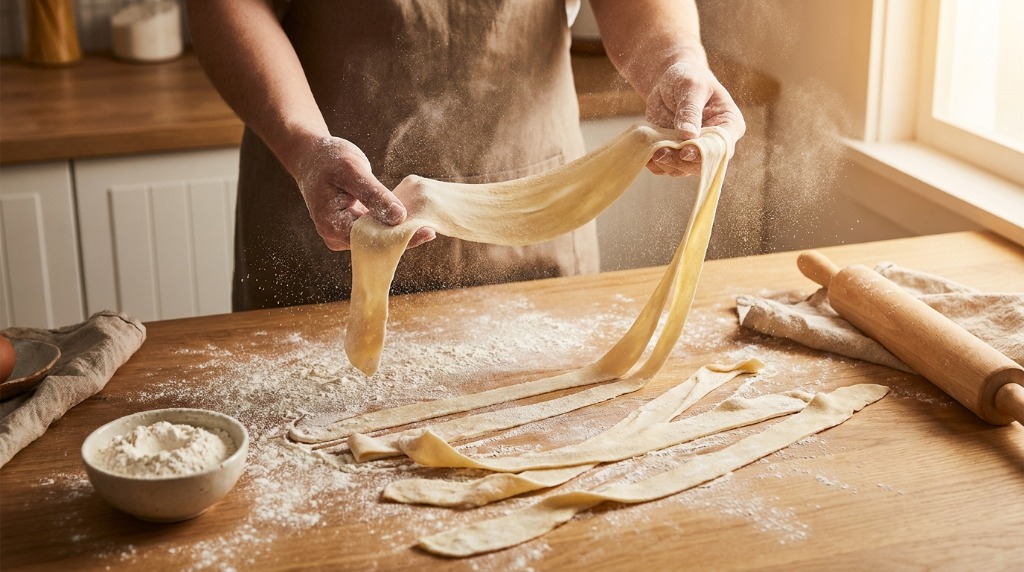
Take one rested dough sheet and hold it at both ends. Gently stretch and pull the sheet, using the weight of the dough to help it elongate — you can also give it a light snap against the work surface to help it stretch. Continue pulling until the sheet is about 0.2–0.3cm thick and 10–15cm wide. Fold the stretched sheet in half, then pull again to create a wide strap of noodles. Alternatively, pull the whole sheet into one long, wide ribbon, then tear it in the center to create two noodles. Each serving typically uses one dough sheet, yielding 2–3 wide noodles. Place the pulled noodles on a floured surface or directly on a tray — they should look wide, thin, and slightly translucent at the edges. The key is confidence: pull with steady, even force and let the dough do the work.
Step 5: Boil the Noodles in Broth
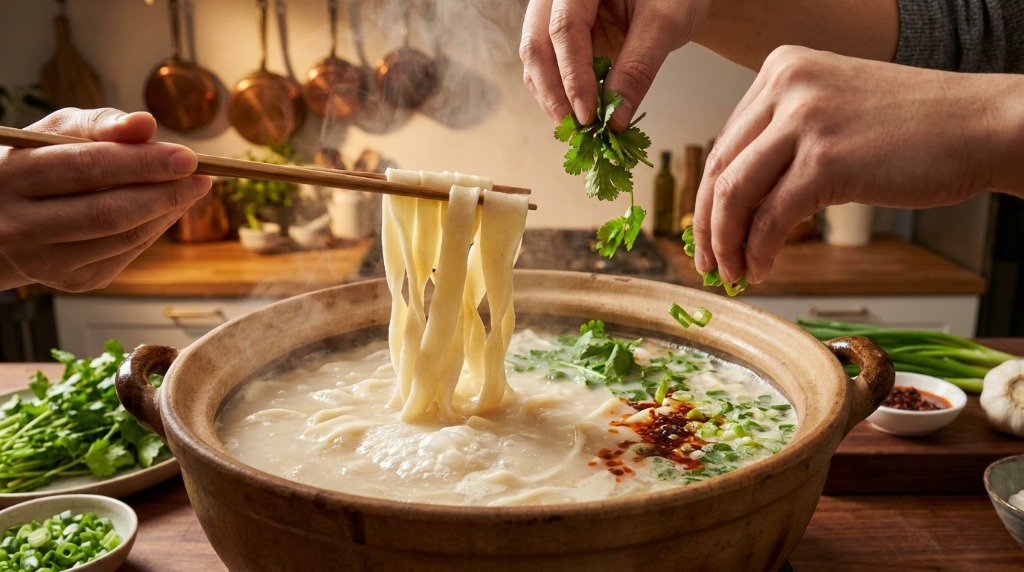
Bring the lamb broth back to a vigorous boil over high heat. Slide the pulled noodles directly into the boiling broth — they will float up almost immediately. Use chopsticks or a spider strainer to gently separate and submerge the noodles. After 1–2 minutes, add the sea mustard, tofu skin strips, glass noodles, and wood ear mushrooms all at once. Cook for another 1–2 minutes until everything is tender and the noodles have expanded and turned slightly translucent. The total boil time should be no more than 3 minutes — overcooked noodles lose their signature chewy bite and will turn soft and mushy in the broth.
Step 6: Assemble and Serve
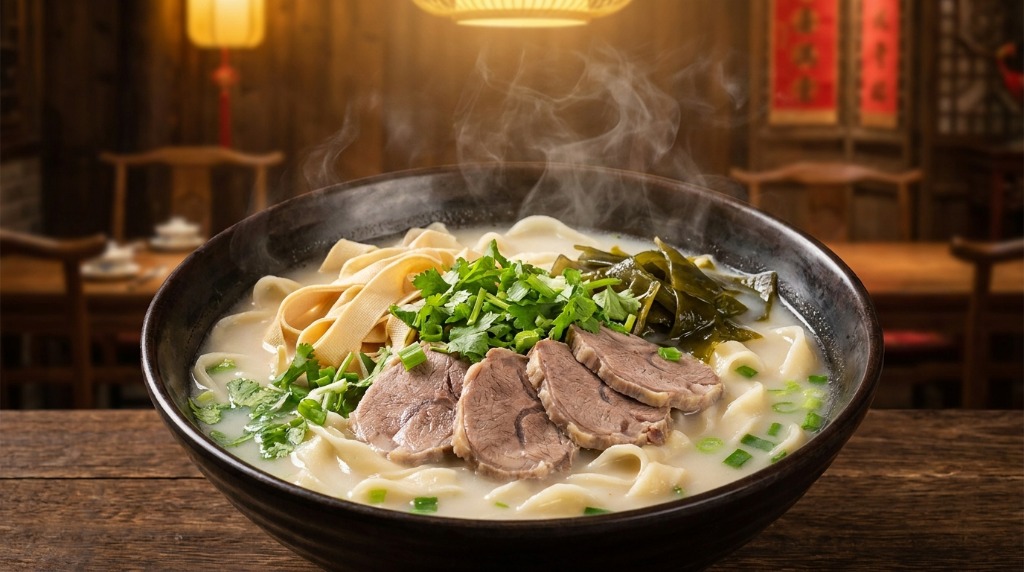
Ladle the hot broth and all the boiled noodles and vegetables into a large deep bowl. Arrange the sliced lamb meat on top, then sprinkle generously with chopped coriander and scallions. Drizzle with a little sesame oil and chili oil if desired. Serve immediately while piping hot — 烩面 is best eaten the moment it is assembled, as the noodles continue to absorb the broth and will eventually soften. Have small dishes of rice garlic cloves or sugar garlic alongside for the classic Henan eating experience.
Tips
- The broth is everything: A true 烩面的 broth should be rich, milky white, and deeply fragrant. The secret is simmering the bones at a gentle but steady bubble — never a rolling boil — for at least 2 hours. If your broth is thin, add a splash of water and keep simmering; it will concentrate and whiten with time.
- Don't rush the dough resting: The minimum total resting time is 90 minutes (30 min after kneading + 60 min after oiling). For even better results, refrigerate the oiled dough sheets overnight — this develops an almost silky stretchiness that makes pulling effortless.
- Pull noodles to order: Only pull and boil noodles just before serving. Pre-pulled or pre-boiled noodles lose their chew and fall apart in the broth. If feeding a crowd, rest all dough sheets and pull one at a time, directly into the boiling pot.
- Salt the broth carefully: Lamb broth can taste gamey if undersalted. Season generously with salt and white pepper — the pepper is the soul spice of 烩面 and should never be omitted.
FAQ
Can I substitute beef or chicken for lamb?
Beef bones make an excellent alternative if you want to avoid lamb. Use beef shank bones and follow the same long-simmering process for a similarly rich broth. Chicken will produce a lighter, less authentic result but works in a pinch.
My noodles keep snapping when I pull them — what do I do?
The dough hasn't rested long enough. Pop the oiled dough sheets into the fridge for 30–60 more minutes and try again. Cold dough (not frozen) pulls much more easily. Also make sure the dough isn't too dry — if it cracks at the edges when pulling, the resting time wasn't long enough.
How do I store leftover broth?
Strain the broth, cool it completely, and refrigerate for up to 3 days or freeze for up to 2 months. The broth actually tastes better the next day as the flavors deepen. Reheat to a boil before using.
Can I use store-bought noodles instead of hand-pulled?
Yes — fresh wide Chinese noodles or even thick rice noodles work as a shortcut. But they won't have the same chewy, broth-clinging texture that hand-pulled noodles deliver. If using store-bought, reduce the boil time to 1–2 minutes as they're often thinner.
What gives the broth its milky white color?
The milky white color comes from emulsified fat and collagen released from the lamb bones during long, gentle simmering. Adding a little vinegar or rice wine to the raw bones before simmering helps extract more collagen. Never cover the pot tightly — leaving it slightly ajar helps steam escape and prevents the broth from turning cloudy.