Candied Hawthorn (Bing Tang Hu Lu)
冰糖葫芦
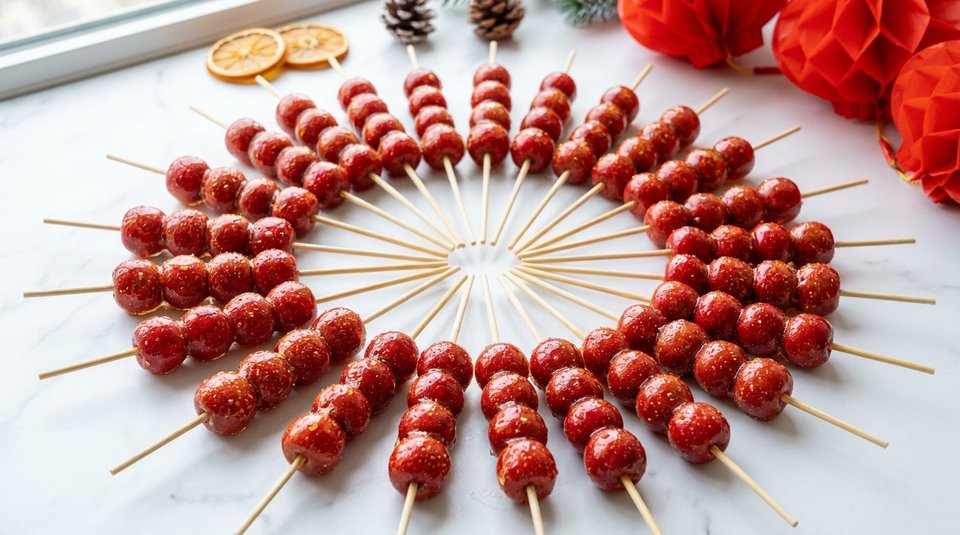
Description / 简介
Bing Tang Hu Lu, literally "ice-sugar gourd," is one of China's most iconic winter street foods, with a history stretching back over 700 years to the Song Dynasty imperial court. Fresh hawthorn berriesnaturally tart and packed with digestive benefitsare skewered on bamboo sticks and dipped in a shimmering coat of rock sugar syrup that hardens into a glassy, crackling shell. The magic lies in the contrast: a thin, brittle candy shell that shatters at first bite, revealing the juicy, sour flesh
Ingredients / 食材
Fresh hawthorn berries 300g (about 20 berries, choose firm unblemished ones)
Rock sugar (ice sugar) 150g
Clean water 150ml
Bamboo skewers 56 sticks
White sesame seeds 5g (optional, for garnish)
Instructions / 制作过程
Step 1: Wash and Prep the Hawthorn
Pick over the hawthorn berries, discarding any that are bruised or soft. Rinse them thoroughly under cold running water. If you prefer a less tart result, make a small horizontal cut around the middle of each berry and pry out the hard white core with the tip of a knife or a strawberry hullerthis also creates a pocket perfect for filling with dried fruit or nuts. Pat the berries completely dry with a clean kitchen towel; any residual moisture will prevent the sugar coat from adhering properly and cause it to slide off. Set them aside on a dry plate.
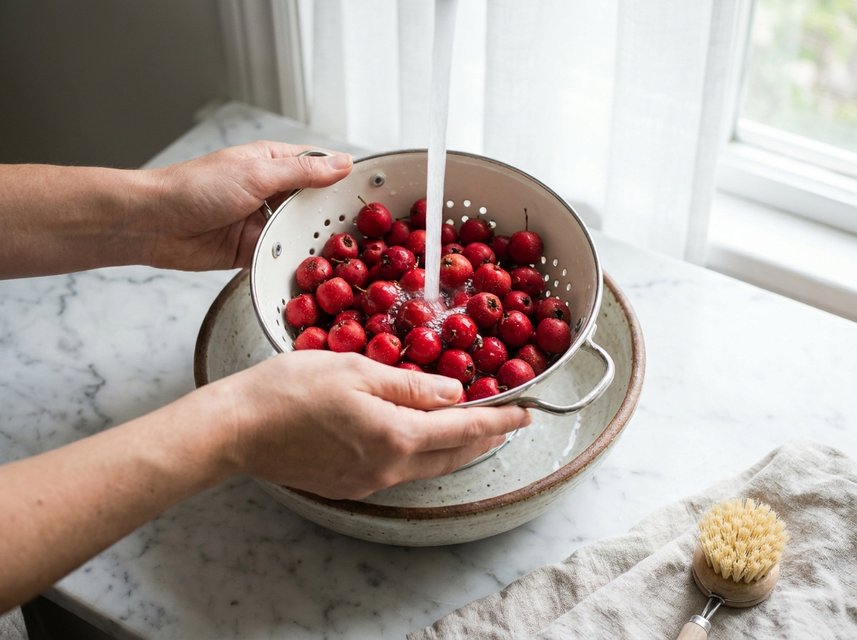
Step 2: Skewer the Hawthorn
Thread 45 hawthorn berries onto each bamboo skewer, leaving a 23 cm gap at both ends of the stick for easy handling. Space the berries evenly and make sure they sit snugly without being crushed. If using fillings, slip a piece of dried goji berry, candied mandarin peel, or red bean paste between the berries as you go. Set the assembled skewers aside on a clean plate.
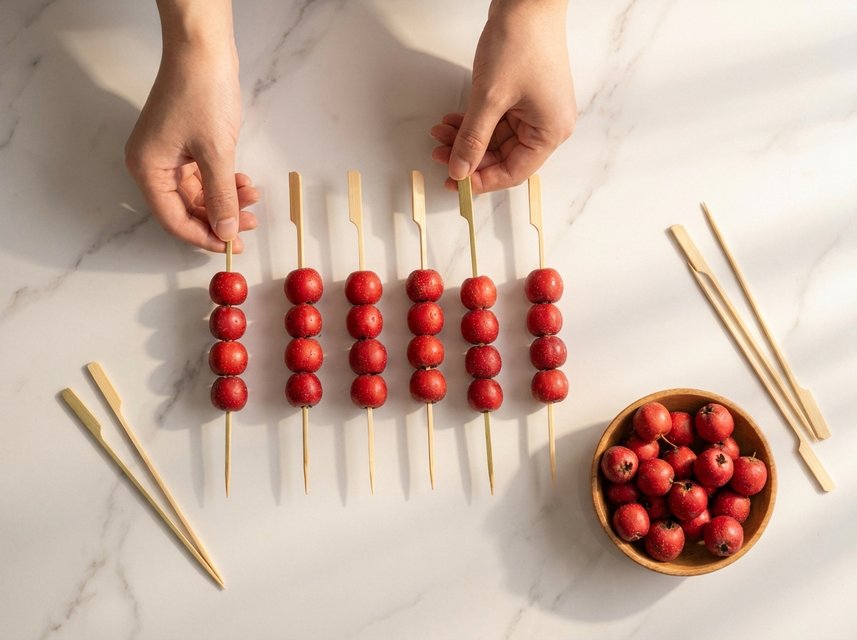
Step 3: Make the Sugar Syrup
Combine the rock sugar and water in a heavy-bottomed saucepan (a thick base distributes heat evenly and prevents burning). Place over medium heat and let the sugar dissolve on its owndo not stir at this stage, as stirring can cause the sugar to crystallize. Once the sugar has fully dissolved and the liquid begins to simmer, reduce the heat to the lowest flame. Swirl the pan gently every 30 seconds to distribute heat evenly. The syrup will gradually transition from transparent to a very light golden color. This slow caramelization is the secret to a glossy, non-sticky sugar shell.
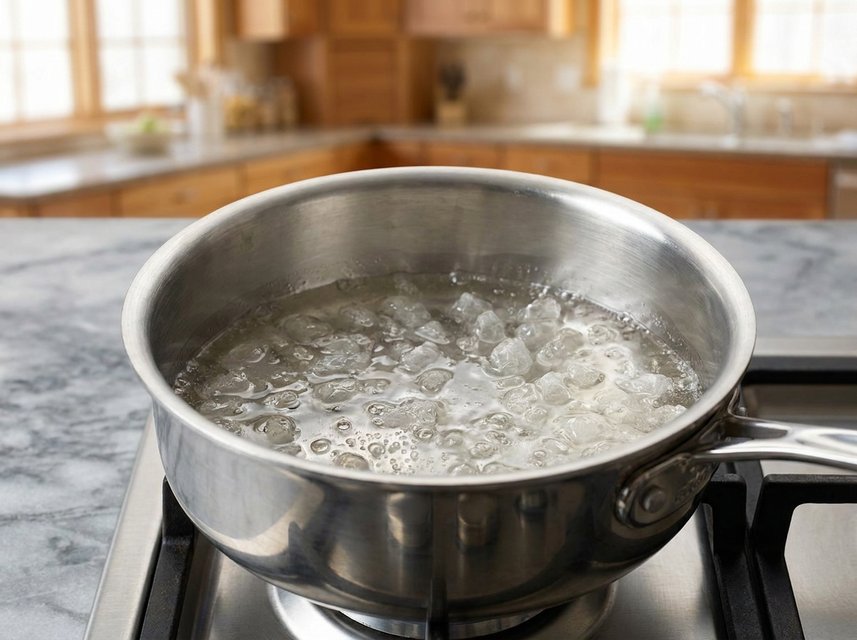
Step 4: Test the Syrup
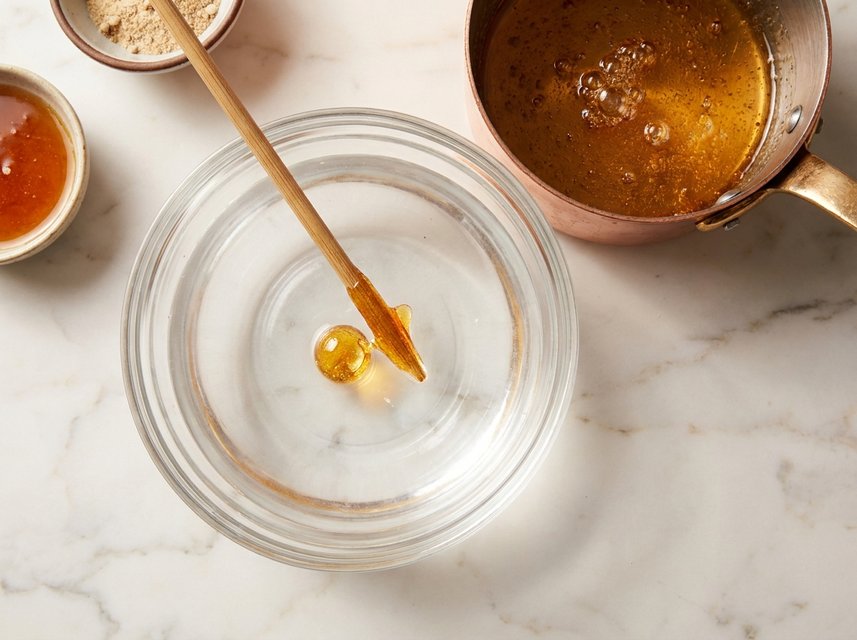
This is the most critical stepgetting the syrup to the right stage determines whether your sugar coat will be glassy and crisp or soft and sticky. Prepare a small bowl of cold water beside the stove. Dip a chopstick or wooden skewer into the syrup, then plunge it straight into the cold water for 23 seconds. Remove the dipped item and try to form the cooled sugar into a small ball between your fingers. If it is hard, brittle, and makes a crisp snap when you bite itperfect. If it is soft, chewy, or sticks to your teethreturn the syrup to the lowest heat and cook for another 3060 seconds, then test again.
Step 5: Coat with Syrup
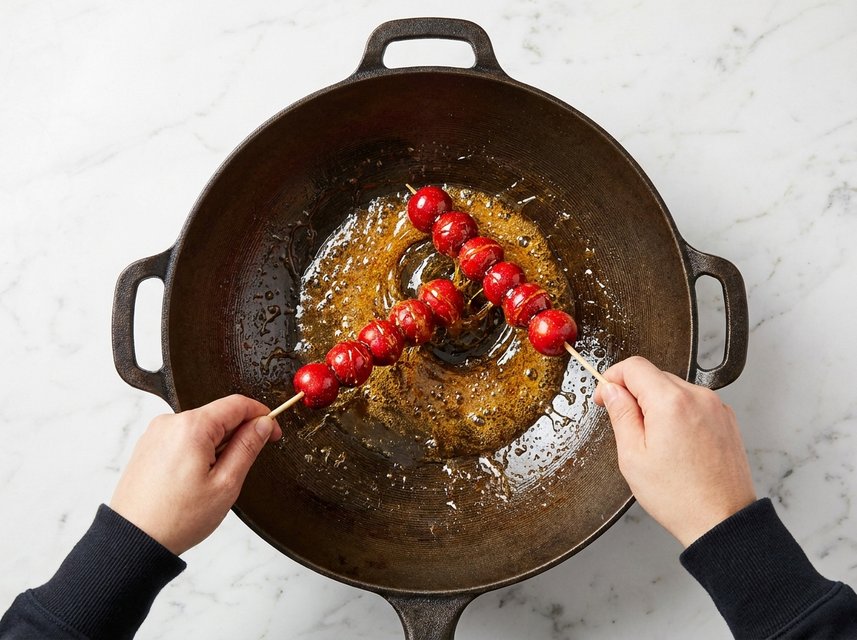
Remove the saucepan from heat entirely. Working quickly, tilt the pan at a slight angle and roll each hawthorn skewer through the syrup in one smooth motionthink of it as painting the syrup onto the fruit rather than dipping it in. Lift the skewer out and let any excess syrup drip off for a moment before laying the stick on a marble slab or oiled baking sheet. If using sesame seeds, sprinkle them onto the syrup while it is still wet. Work fastthe syrup begins to set within seconds of leaving the heat, and a cooled syrup will produce a thick, uneven coating rather than a thin, glassy shell.
Step 6: Cool and Set
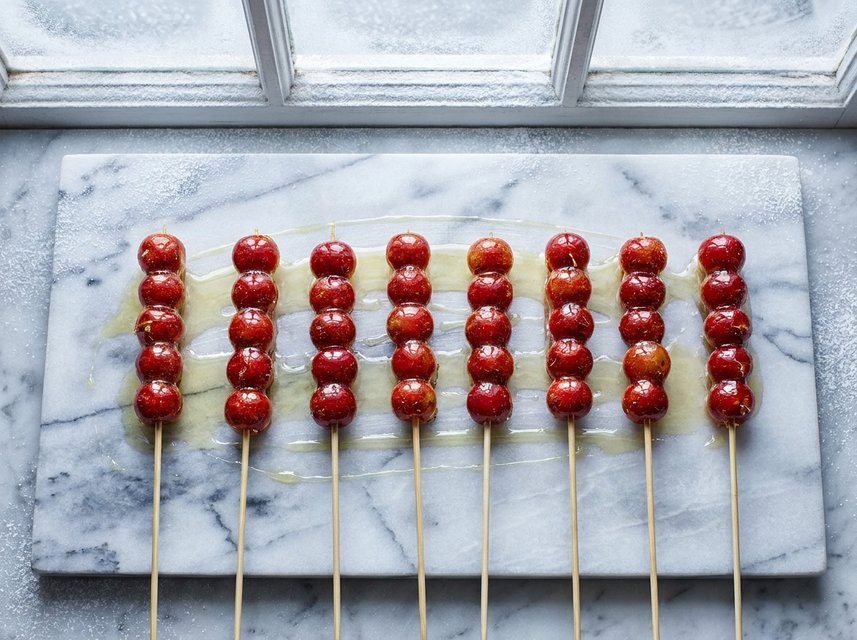
Place the sugar-coated skewers in a cool, dry spot (not the refrigerator) and let them rest for 810 minutes. The syrup will harden into a perfectly transparent, amber shell that sparkles as it cools. Once fully set, the sugar shell will be firm to the touch and make a clear, crisp sound when the sticks tap against each other. Serve immediately for the best texturethe shell stays crisp for several hours in dry weather. Do not refrigerate, as condensation will make the sugar coat soft and sticky.
Tips
- Dry berries are non-negotiable: any water on the hawthorn surface will cause the sugar to slide off rather than adhere. If washing them the night before, store on a paper-towel-lined tray uncovered in the fridge so they air-dry completely.
- Sugar-to-water ratio matters: the classic 1:1 weight ratio (150g sugar : 150ml water) produces a thin, even coating. Using more water dilutes the syrup and makes it harder to reach the hard-crack stage; using less risks burning.
- Work in small batches: if making more than 45 skewers, reheat the syrup briefly over the lowest flame between batches to keep it fluid enough to coat evenly.
- Temperature guide (if using a thermometer): the ideal syrup stage for Bing Tang Hu Lu is 150155C (hard-crack stage). Above 160C the sugar darkens and turns bitter; below 145C it stays chewy.