Guo Bao Rou (Sweet and Sour Pork)
锅包肉
Description / 简介
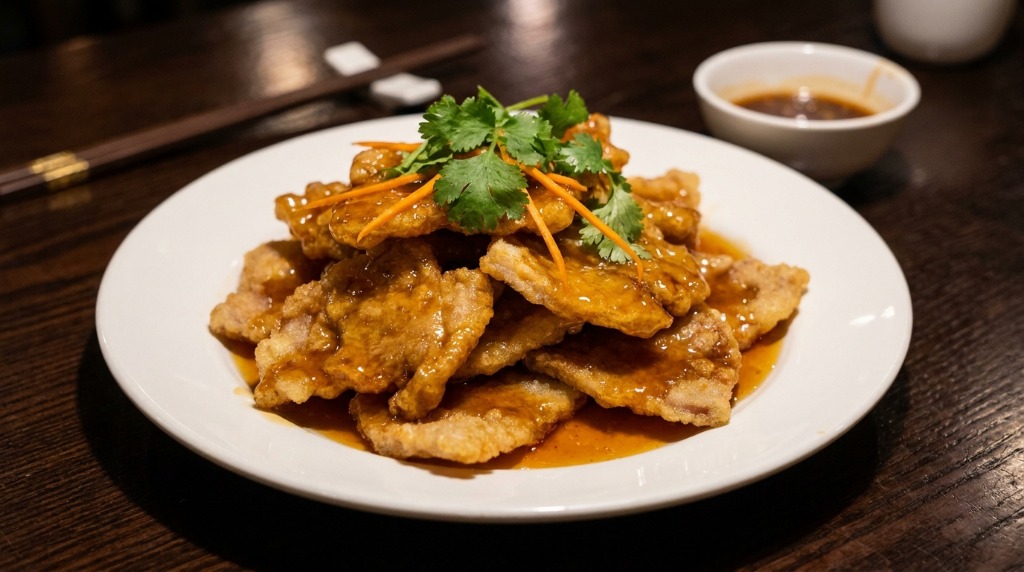
Guo Bao Rou (锅包肉), literally "pot-wrapped meat," is one of the most iconic dishes from China's northeastern province of Heilongjiang and a cornerstone of 东北美食 culture. Originally created in Harbin around 1907–1908 by chef Zheng Xingwen for Russian diplomats, this dish transforms humble pork loin into golden, shatteringly crispy strips bathed in a glossy sweet and sour sauce made from white vinegar and sugar. The technique — coating thin pork slices in potato starch, double-frying them until shat
Ingredients / 食材
Pork tenderloin 500g
Potato starch 200g
Water 180ml
Vegetable oil 500ml (for deep-frying)
Sugar 50g
White vinegar 50ml
Salt 3g
Light soy sauce 5ml
Fresh ginger 15g (julienned)
Garlic 10g (minced)
Scallions 20g (julienned)
Carrot 30g (julienned)
Coriander 10g (chopped)
Instructions / 制作过程
Step 1: Slice and Marinate the Pork
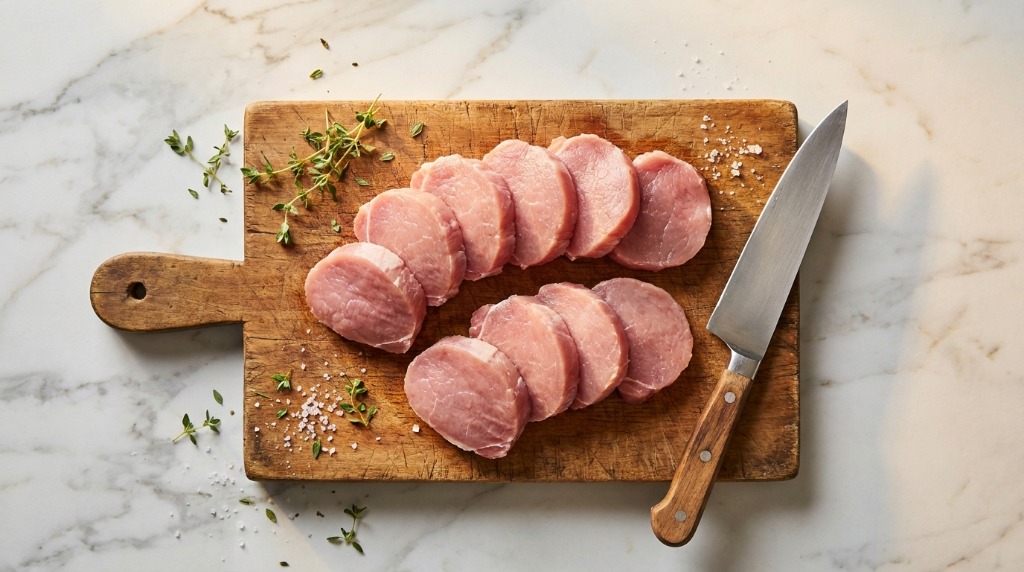
Trim the pork tenderloin of any visible fat or sinew. Slice the pork against the grain into pieces approximately 4cm wide and 3mm thick — thin enough to crisp easily, thick enough to stay juicy inside. Lay each slice flat and gently pound it with the flat side of a knife to break the muscle fibers, which tenderizes the meat and helps it absorb the coating more evenly. Season the pork with 3g of salt and 5ml of light soy sauce, mix well, and let it rest for 10 minutes. Do not add cooking wine or any liquid-based marinades — the pork is simply seasoned, not marinated.
Step 2: Make the Potato Starch Coating
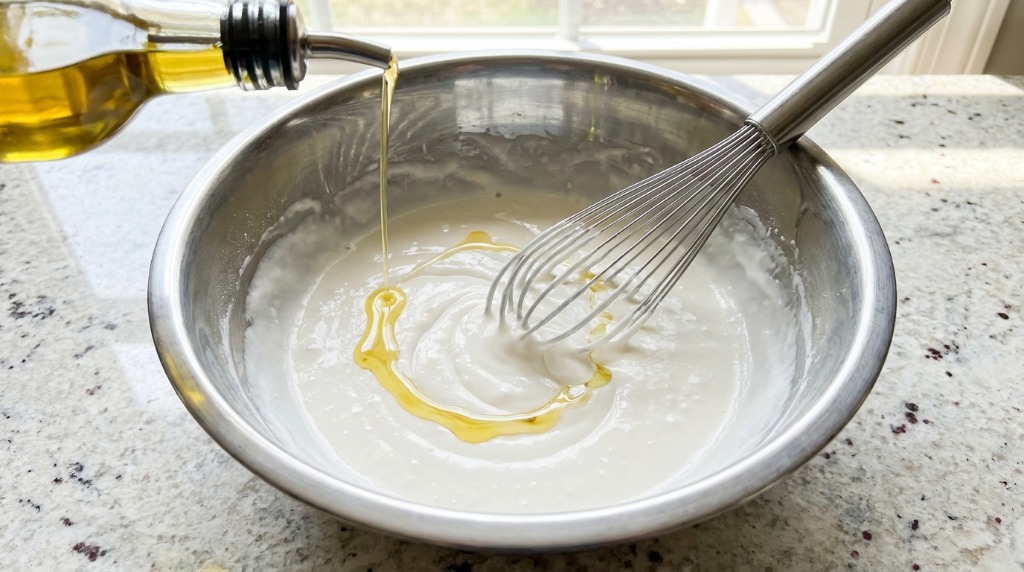
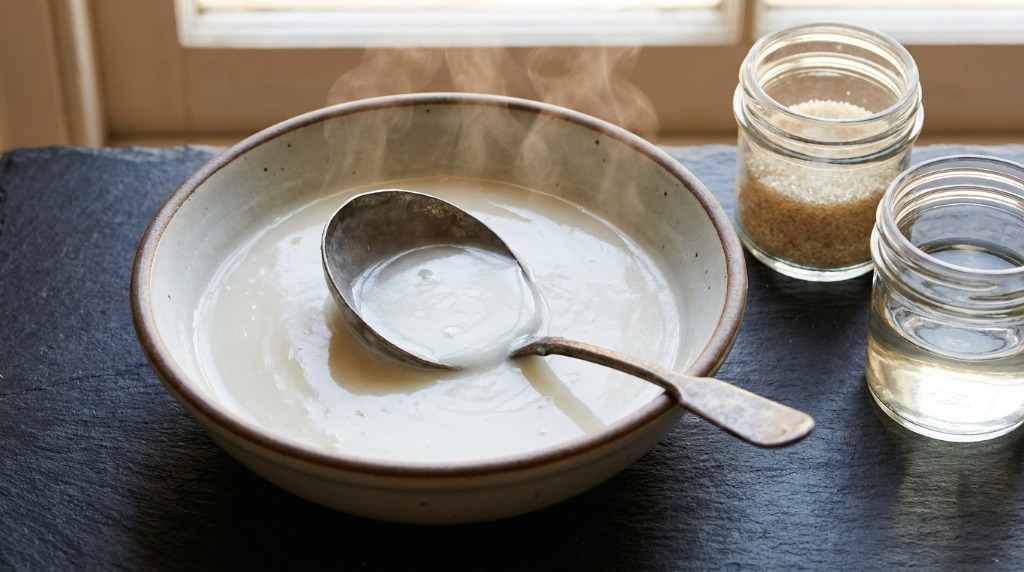
In a large bowl, combine the potato starch with 180ml of cold water. Stir until the starch is fully dissolved and the mixture is uniform. Let it rest for 10 minutes undisturbed — during this time the starch will settle to the bottom and the excess water will sit on top. Carefully pour off the top layer of clear water, leaving only the thick white starch paste at the bottom. This step is crucial: the coating should be thick, smooth, and paint-like in consistency. Stir in 1 tablespoon of vegetable oil, which makes the coating more fluid and prevents oil splattering when the pork hits the hot oil. The result should be a thick, creamy paste that clings to the pork without dripping off.
Step 3: Coat the Pork Slices
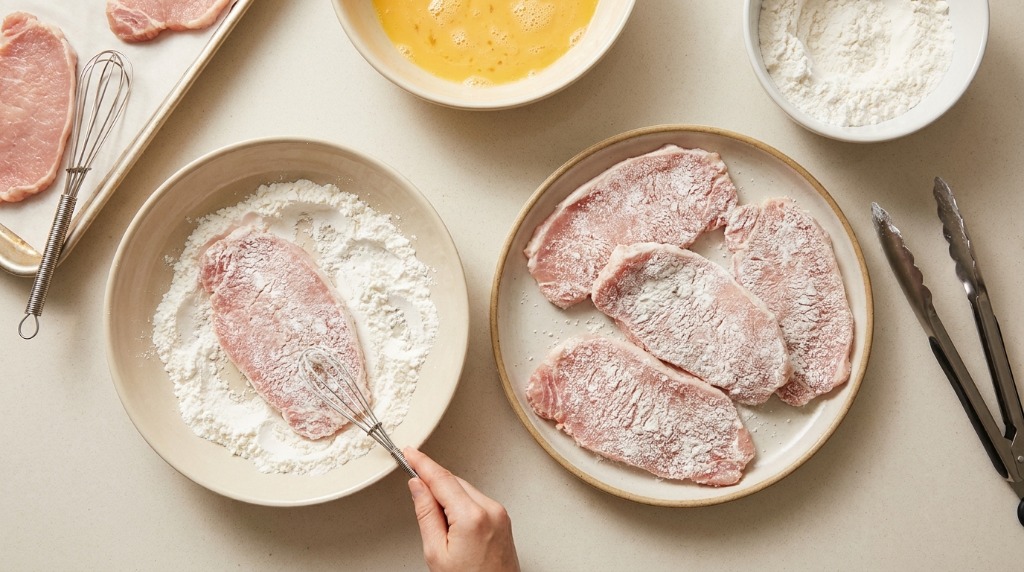
Add the marinated pork slices to the starch paste and mix thoroughly by hand, ensuring every piece is evenly coated with a thick layer of the white paste. The coating should fully encase each slice — thin but complete, like a light snowfall on each piece. Potato starch is non-negotiable for this dish; corn starch or wheat flour will not deliver the same shatteringly crisp, non-softening crust that defines authentic Guo Bao Rou.
Step 4: Double-Fry the Pork
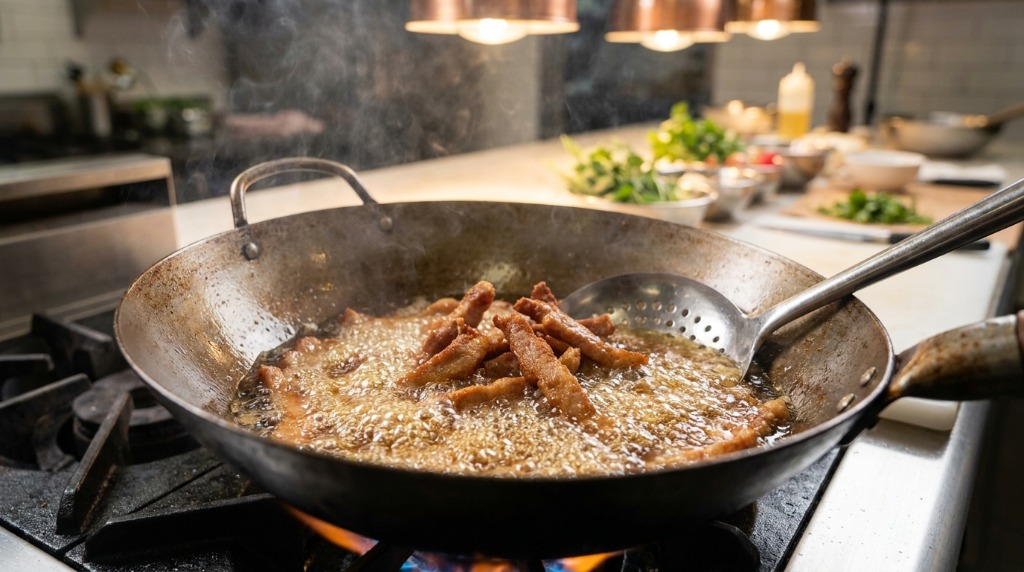
Heat the vegetable oil in a wok or deep saucepan to 160°C (320°F) — test by dropping a small piece of coating into the oil; it should float and bubble immediately without sinking. Carefully lower the coated pork slices into the oil one by one, taking care not to crowd the wok. Fry for 2–3 minutes, until the coating has set and turned pale gold. Remove with a slotted spoon and drain on a wire rack. Increase the oil temperature to 190°C (374°F). Return all the pork to the oil and fry for a second time for 45–60 seconds until deep golden and irresistibly crispy. Drain well on a wire rack. The second fry is essential — it is what creates the signature crunch that lasts even after the sauce is added.
Step 5: Make the Sweet and Sour Sauce
In a small bowl, combine the sugar, white vinegar, and 1g of salt. Stir until the sugar is completely dissolved — there is no need to heat this sauce separately. Have the julienned ginger, garlic, scallions, and carrot ready in a small bowl. The classic Harbin-style sauce is intentionally simple: vinegar for sharp acidity, sugar for balanced sweetness, and a touch of salt to unify the flavors. There is no ketchup, no tomato paste, and no cornstarch thickener in the authentic version — just these three ingredients, applied quickly.
Step 6: Sauce and Toss
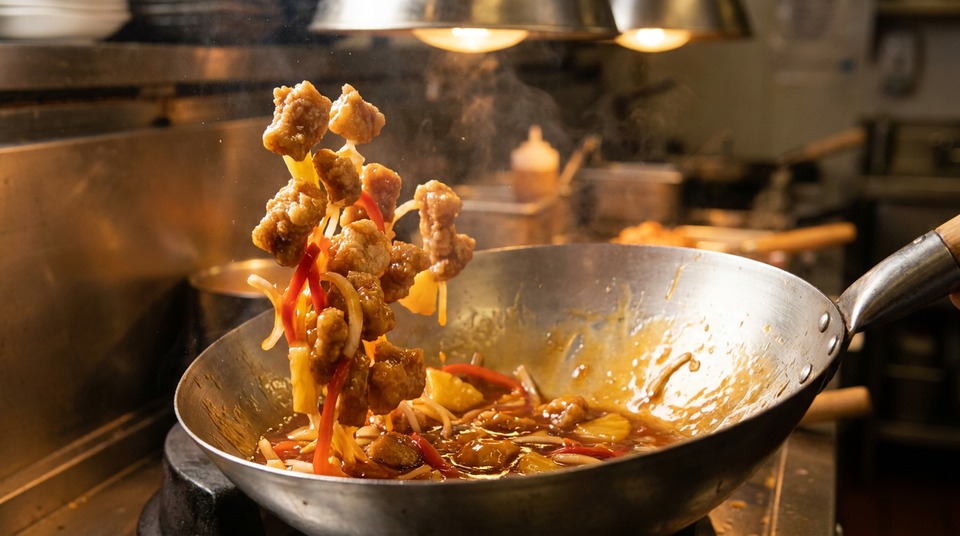
In a clean wok over medium-high heat, add 2 tablespoons of the frying oil and heat until shimmering. Add the julienned ginger and garlic and stir-fry for 15 seconds until fragrant. Pour in the prepared sweet and sour sauce and bring it to a brief boil — about 20 seconds — until the sauce just begins to thicken slightly. Immediately add the double-fried pork pieces and all the julienned scallions and carrot. Using tongs or two spatulas, toss everything together rapidly and coat each piece in the glossy sauce. The entire tossing process should take no more than 15 seconds — the pork goes from wok to plate directly. Any longer and the coating will soften from the moisture in the sauce.
Step 7: Plate and Serve
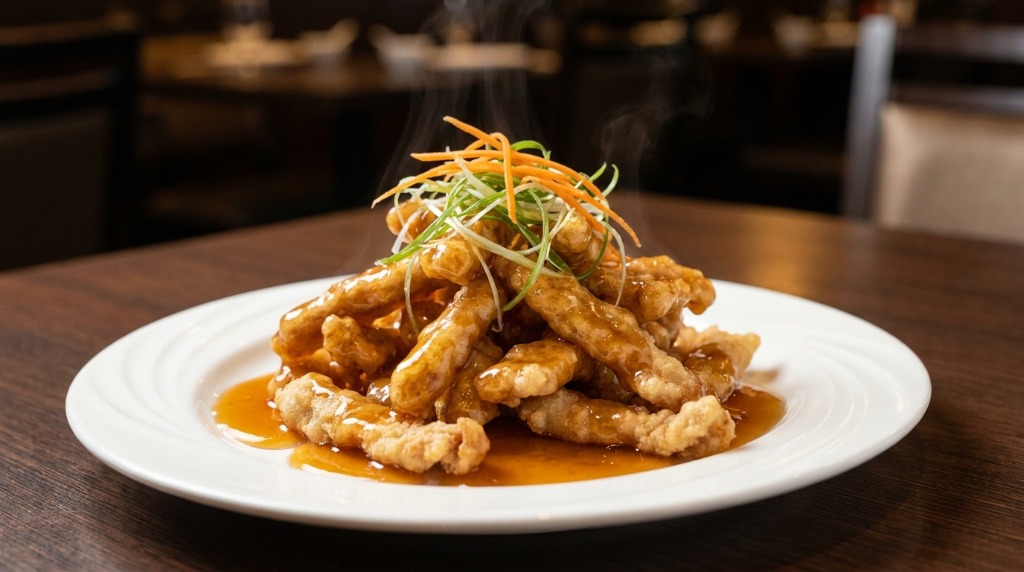
Arrange the sauced Guo Bao Rou on a clean white plate, letting any excess sauce drip from the pieces as you plate them. Sprinkle with freshly chopped coriander for a burst of color and freshness. Serve immediately while the exterior is still shattering-crisp. Guo Bao Rou is best eaten the moment it is plated — the crispness is the dish's defining characteristic and it will begin to soften within minutes.
Tips
- Potato starch only: No substitution delivers the same result. Corn starch produces a soft, chewy coating that turns soggy the moment the sauce is added. Sweet potato starch can work but produces a denser, darker crust. If only corn starch is available, the dish will still be edible but noticeably less authentic.
- The second fry is non-negotiable: The first fry cooks the pork; the second fry at higher heat is what makes the crust rigid and permanently crispy. Without it, the coating will turn soft within 60 seconds of saucing.
- Do not add cooking wine to the marinade: Many home cooks instinctively reach for cooking wine, but wine cannot escape a thick starch coating — it becomes trapped and gives the meat an unpleasant fermented flavor. Salt alone is sufficient for seasoning.
- Sauce and serve in under 20 seconds: Once the sauce hits the wok, you have about 15 seconds to coat and plate. Do not walk away, do not linger. The wok should be your staging area for this final act.
- Oil temperature matters more than oil quantity: As long as the oil is deep enough to fully submerge the pork pieces, the exact amount is less important than maintaining the correct temperature throughout both frying stages.
FAQ
Can I use pork belly instead of tenderloin?
Pork belly has too much fat — it will make the coating heavy and slippery, and the fat will interfere with adhesion of the sauce. Pork tenderloin (or pork loin) is the correct cut because it is lean, tender, and has a clean surface for the starch coating to grip.
My coating falls off during frying — why?
This happens when the coating is too thin or too watery. Ensure the starch paste is thick and paint-like before coating the pork. Also make sure the pork is thoroughly dry before coating — any moisture on the surface creates a barrier between the meat and the starch.
Can I bake or air-fry this instead of deep frying?
Baking will not produce a crisp coating — the starch needs direct contact with hot oil to gelatinize and harden properly. Air frying at 200°C for 12–15 minutes can produce a passable result but will not achieve the shatteringly crisp texture of deep-fried Guo Bao Rou.
What is the difference between Harbin-style and other regional versions?
The Harbin (original) version uses a clear white vinegar-and-sugar sauce with no additional thickeners or colorants — the sauce is sharp, clean, and sour-forward. The Shenyang version adds ketchup for a redder, sweeter sauce. The Liaoning version sometimes includes pineapple or hawthorn for a fruitier note. All are valid regional interpretations.
How do I know when the pork is properly fried?
The coating should be deep golden, slightly translucent at the edges, and make a faint crackling sound as it cools. When you tap a piece against the wire rack, it should feel rigid and hollow, not soft or flexible.