Steamed Sea Bass
清蒸鲈鱼
Description / 简介
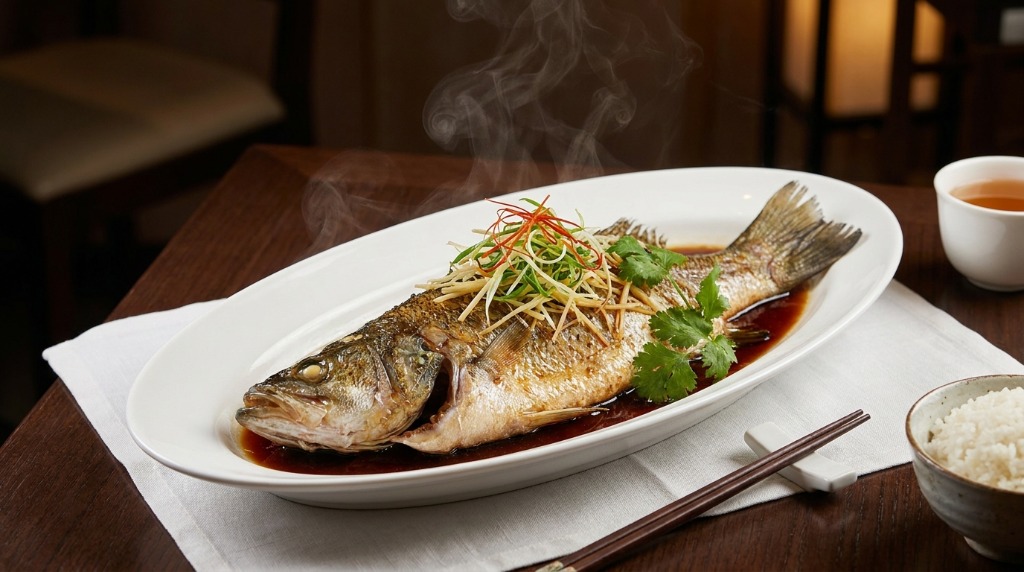
Steamed Sea Bass (清蒸鲈鱼) is one of the most celebrated dishes in Cantonese cuisine — a testament to the philosophy that the best cooking requires the least interference. A whole fresh sea bass, cleaned and scored, is placed atop a bed of ginger and scallion, steamed over high heat until the flesh turns opaque and flakes at the touch, then finished with a cascade of sizzling hot oil that blooms the aromatics and a careful drizzle of steamed fish soy sauce around the edges. The result is a plate of
Ingredients / 食材
Whole sea bass 500g (ask your fishmonger to clean and descale it)
Fresh ginger 30g (15g sliced, 15g julienned)
Scallions 20g (10g cut into segments, 10g julienned)
Red chili 1 piece (julienned, for color)
Steamed fish soy sauce 30ml
Cooking wine or Shaoxing wine 10ml
Salt 3g
White pepper powder 1g
Peanut oil or vegetable oil 30ml
Coriander leaves a few sprigs (optional, for garnish)
Instructions / 制作过程
Step 1: Prepare and Season the Fish
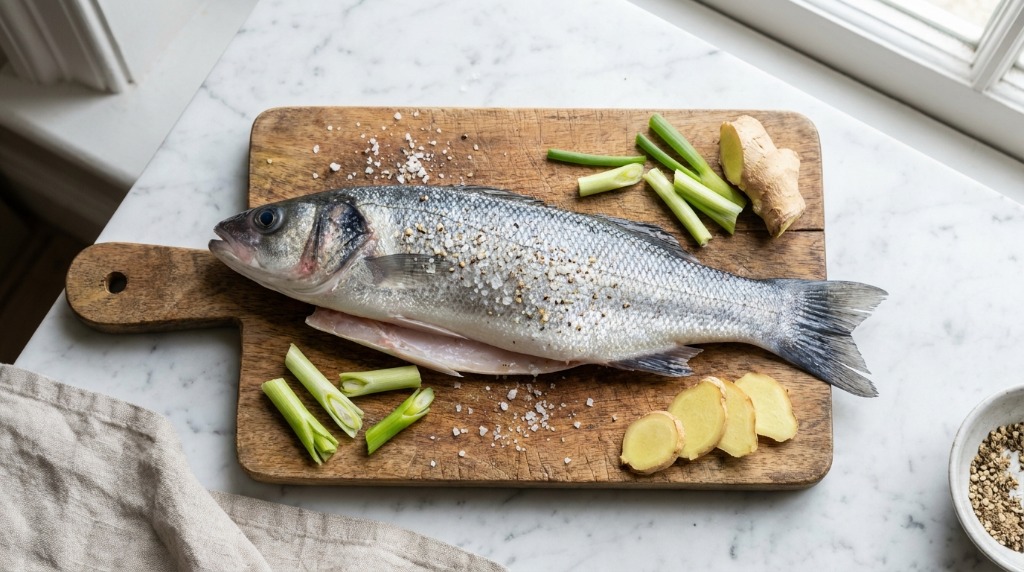
Ask your fishmonger to clean and descale the sea bass, or do it yourself at home. Rinse the fish under cold running water, paying special attention to the body cavity — use your fingers or a small spoon to scrape away the dark membrane lining the belly, as this is the primary source of any fishy odor. Pat the fish completely dry with paper towels, inside and out. Using a sharp knife, make 3–4 diagonal cuts on each side of the fish, cutting down to the bone at about 45 degrees — these slits allow steam to penetrate the thickest parts and ensure even cooking. Season the fish generously with 3g of salt, 1g of white pepper powder, and 10ml of cooking wine, rubbing it all over the body and into the cuts. Stuff a few ginger slices and scallion segments into the belly cavity. Set aside for 10 minutes to allow the seasonings to penetrate.
Step 2: Set Up and Steam
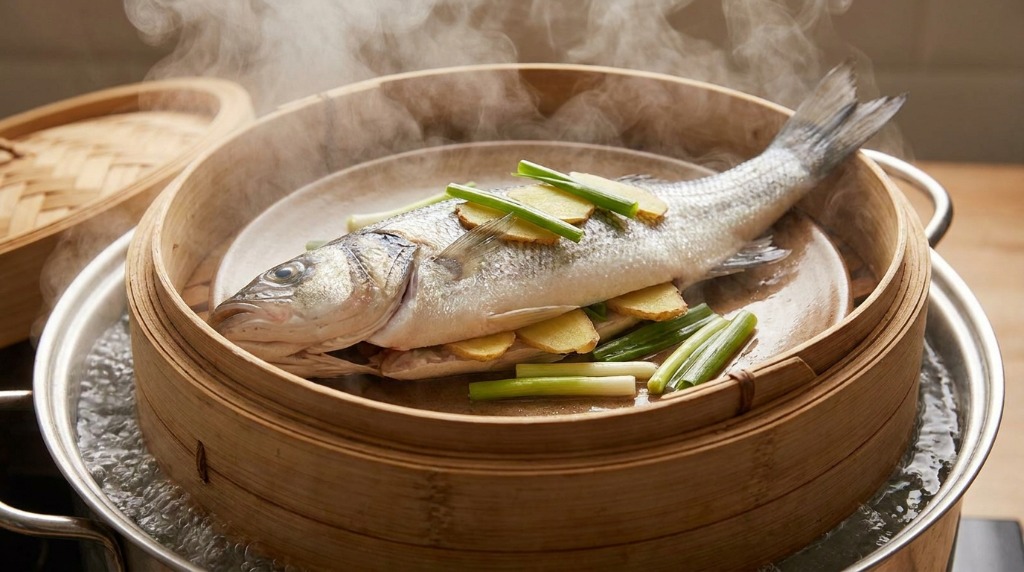
Bring a large pot or wok of water to a vigorous boil over high heat. While the water heats, place a long heatproof plate or steamer rack inside your steamer. Lay 2–3 ginger slices and a few scallion segments across the plate — this lifts the fish off the bottom, allowing steam to circulate evenly beneath it as well as infusing the fish with fragrance from below. Lay the seasoned fish on top of the aromatics. Place the plate inside your steamer or wok, cover tightly, and steam over high heat for exactly 8 minutes for a 500g fish. If your fish is larger (600–700g), steam for 10 minutes. The fish is done when the flesh turns completely opaque and white, and a thin skewer or chopstick inserted into the thickest part of the fish near the bone meets no resistance.
Step 3: Remove and Discard the Steamed Liquid
Carefully remove the hot plate from the steamer using two thick cloths or wide tongs — the plate will be extremely hot. The liquid that has collected in the plate during steaming is discarded — it contains the impurities and fishy compounds that were drawn out of the flesh during cooking, and removing it is the single most important step for a clean, non-gamey flavor. Tilt the plate or use a large spoon to pour off every last drop of the milky steamed liquid. Do not pour it over the fish or into the cooking water. Carefully remove and discard the spent ginger and scallion from the fish's surface and cavity.
Step 4: Arrange the Aromatic Garnish
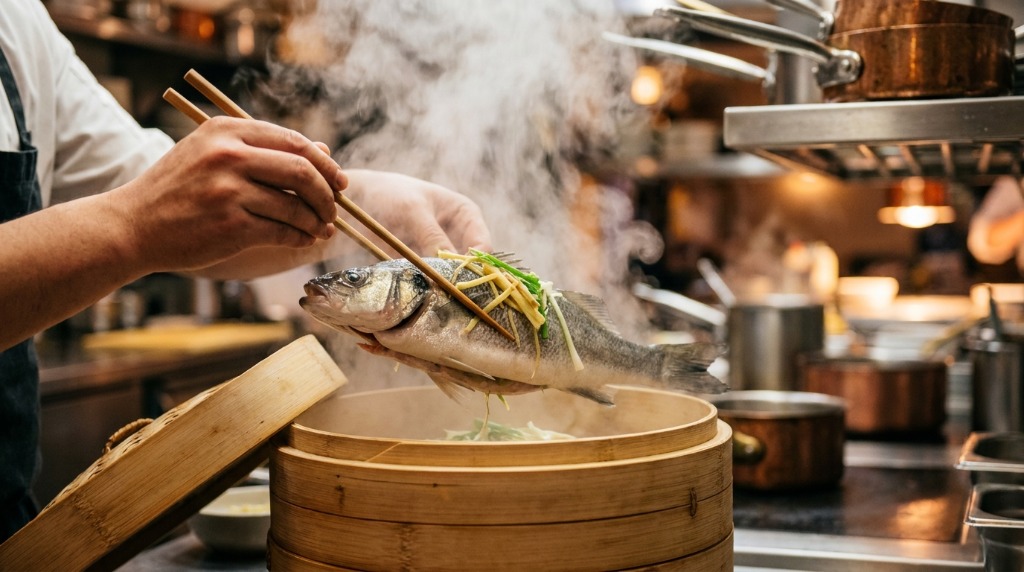
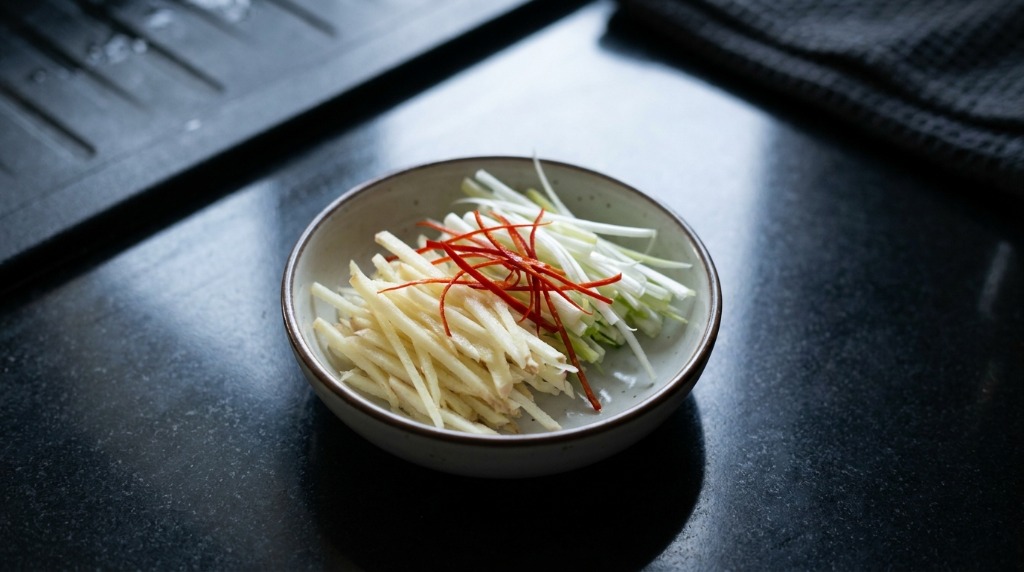
Prepare your garnish just before the fish finishes steaming so everything is fresh and vibrant. Using a peeler or sharp knife, cut the fresh ginger and scallions into the finest julienne you can manage — the thinner the cuts, the more delicate and visually elegant the result. Soak the julienned ginger and scallion in a bowl of cold water for 5 minutes; they will curl slightly and become more delicate in texture. Slice the red chili into equally thin threads for a splash of contrasting color. Drain and pat dry the curled ginger and scallion threads. Arrange them artfully across the top of the fish — covering the scored cuts and the cavity opening for a clean, polished presentation.
Step 5: Bloom with Sizzling Hot Oil
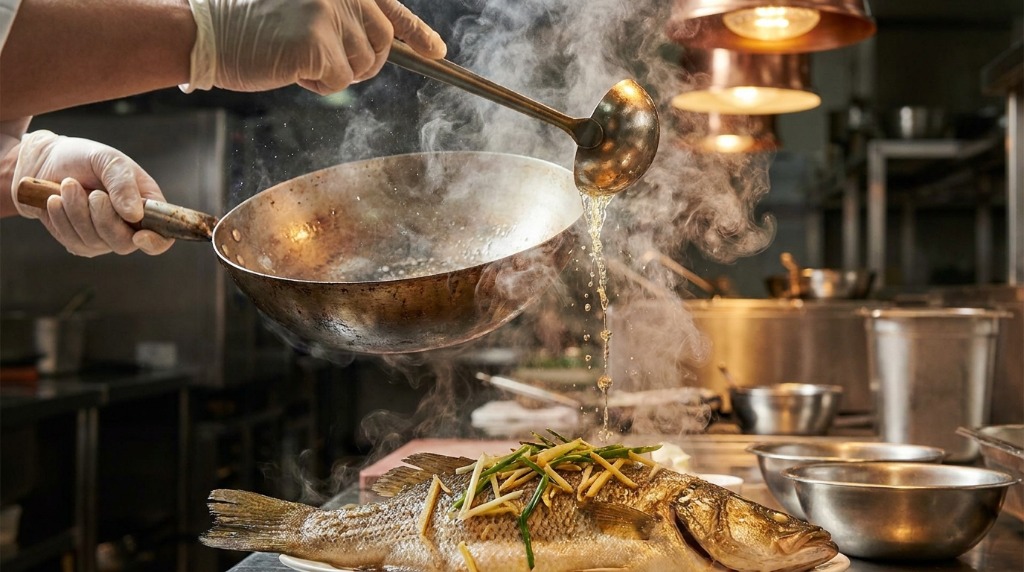
In a small saucepan, heat the peanut oil over high heat until it begins to shimmer and just starts to smoke — you can see faint wisps rising from the surface. The oil should be at approximately 200°C (392°F). Carefully lift the saucepan and pour the sizzling hot oil in one steady, even pour directly over the julienned garnish on the fish. You will hear a dramatic sizzle — that sound is the aromatics blooming, releasing their fragrance in an instant. Work quickly and pour the oil from above the fish so the heat reaches all the garnish at once. This step takes less than 5 seconds but transforms the entire dish.
Step 6: Add Soy Sauce and Serve
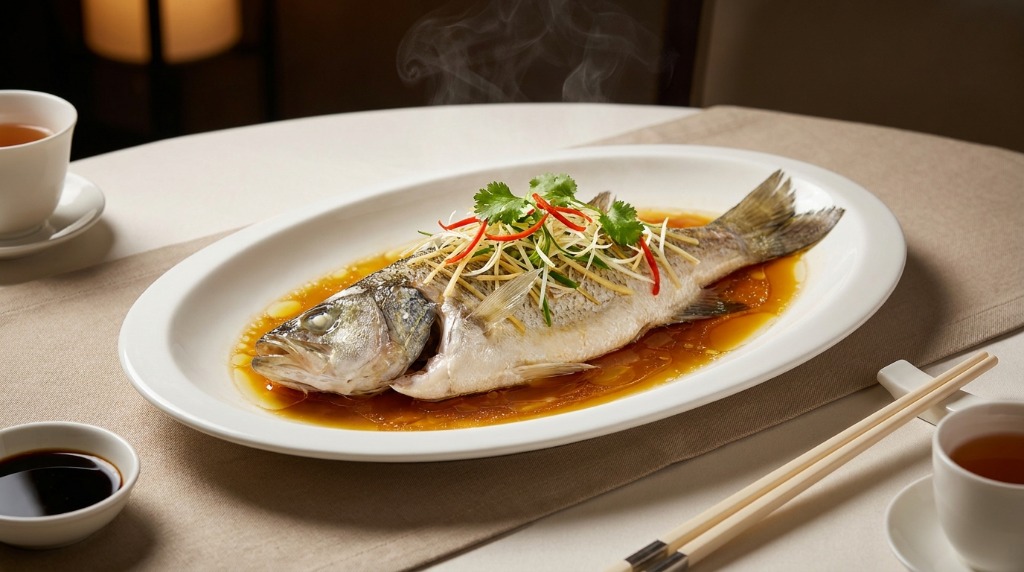
Finally, pour the steamed fish soy sauce gently around the edges of the plate — not over the fish itself. Pouring it over the flesh would obscure the beautiful white color and dilute the clean flavor of the delicate flesh. The soy sauce will pool around the fish and season each bite as it is dipped or eaten alongside. Serve the Steamed Sea Bass immediately, directly from the steaming plate, with a bowl of plain steamed white rice on the side. It pairs naturally with a small dish of fresh ginger and soy sauce for dipping the fish if desired.
Tips
- Freshness is non-negotiable: Steaming amplifies whatever flavor the fish starts with — there is nowhere to hide a sub-par fish. Choose a sea bass with clear, bulging eyes, bright red gills, and firm, springy flesh. If the fish smells intensely fishy at the market, it will only get worse during steaming.
- Dry the fish thoroughly before seasoning: Any surface moisture dilutes the seasoning and can cause the skin to stick to the steamer. After rinsing, pat dry with paper towels and let it air-dry for 10 minutes if time allows.
- Steam over highest heat throughout: Cantonese steaming tradition demands full-boiling water and maximum heat from start to finish. Never reduce to a simmer mid-steam — the gentle approach that works for braises will turn steamed fish dry and rubbery.
- 8 minutes is a starting point: A 500g fish steams in 8 minutes. Add 1 minute per additional 100g. When in doubt, check at the minimum time — overcooked steamed fish is irreversibly dry.
- The hot oil is not optional: Pouring sizzling oil over the aromatics is what transforms this from "cooked fish with garnish" to the fragrant, restaurant-quality dish it should be. The oil carries the volatile aromatics from the ginger and scallion into the fish's surface.
FAQ
Can I use a different white fish?
Yes — sea bass is ideal for its firm, meaty texture and mild flavor, but snapper, grouper, or flatfish (sole, flounder) all work beautifully with this method. Adjust steaming time based on the thickness of the fish rather than its weight.
My fish skin stuck to the plate — how do I fix it?
The fish must be elevated on a rack, ginger, or scallion segments, never placed directly on the plate bottom. If the skin has already stuck, slide a thin spatula carefully beneath the fish to release it. Prevention: always use the elevated method.
Is the steamed liquid really that important to discard?
Yes — this is the most critical de-smelling step in the entire recipe. The liquid accumulates all the impurities and fishy compounds that the steam draws out of the flesh. Keeping it would introduce a muddy, gamey note that no amount of soy sauce can fix.
What can I substitute for steamed fish soy sauce?
In a small bowl, mix 2 tablespoons of light soy sauce with 1 teaspoon of oyster sauce (optional) and 1 teaspoon of warm water. The diluted version is less salty and won't overpower the delicate fish.
Can I steam the fish without a steamer?
Yes — use a large wok with a metal steamer rack or improvise with a metal colander and a large pot lid. The key is creating a sealed environment so steam cannot escape. A dutch oven with a metal rack inside also works well.