Rou Jia Mo (Chinese Pork Burger)
肉夹馍
Description / 简介
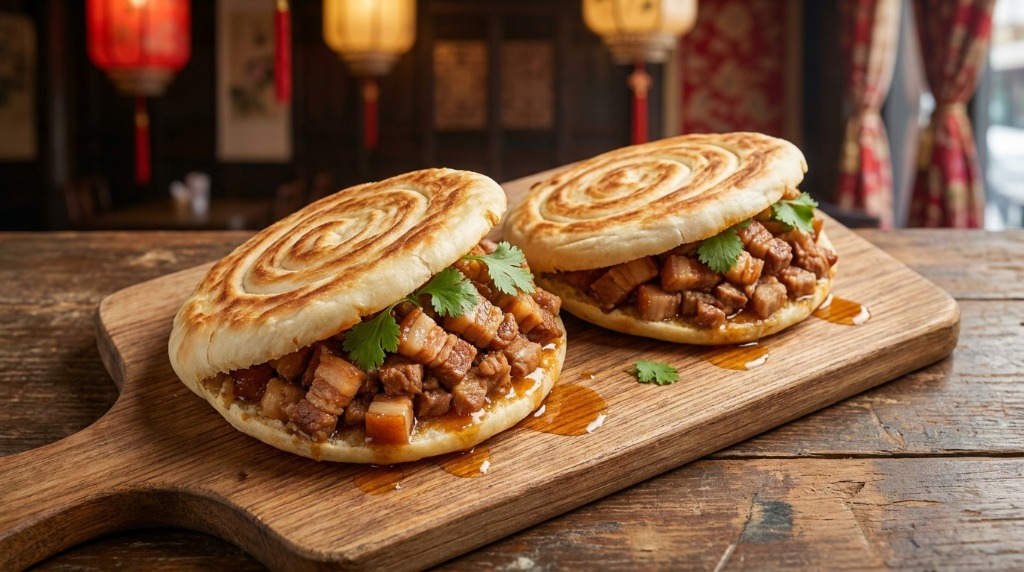
Rou Jia Mo (肉夹馍), literally meaning "meat wedged in bread," is a legendary Shaanxi street food that dates back to the Warring States period over 2,000 years ago. Often called the "Chinese hamburger," it consists of crispy white flatbread (baiji mo) filled with slow-braised pork belly in a deeply aromatic sauce.
Ingredients / 食材
Medium-strict flour 500g
Lukewarm water 260ml
Instant yeast 3g
Salt 3g
Vegetable oil 15ml
Pork belly with skin 800g (boneless)
Soy sauce 50ml
Dark soy sauce 25ml
Rice wine 30ml
Rock sugar 30g
Ginger 20g (sliced)
Green onions 2 stalks
Star anise 2 pieces
Cinnamon stick 1 small piece
Bay leaves 2
Sichuan peppercorns 5g
Cumin seeds 3g
Black cardamom 1 small piece
Galangal 1 small piece
Cloves 2
Fresh cilantro 10g (optional, for garnish)
Green chili 1 (optional, for garnish)
Instructions / 制作过程
Step 1: Make the Baiji Mo Flatbread Dough
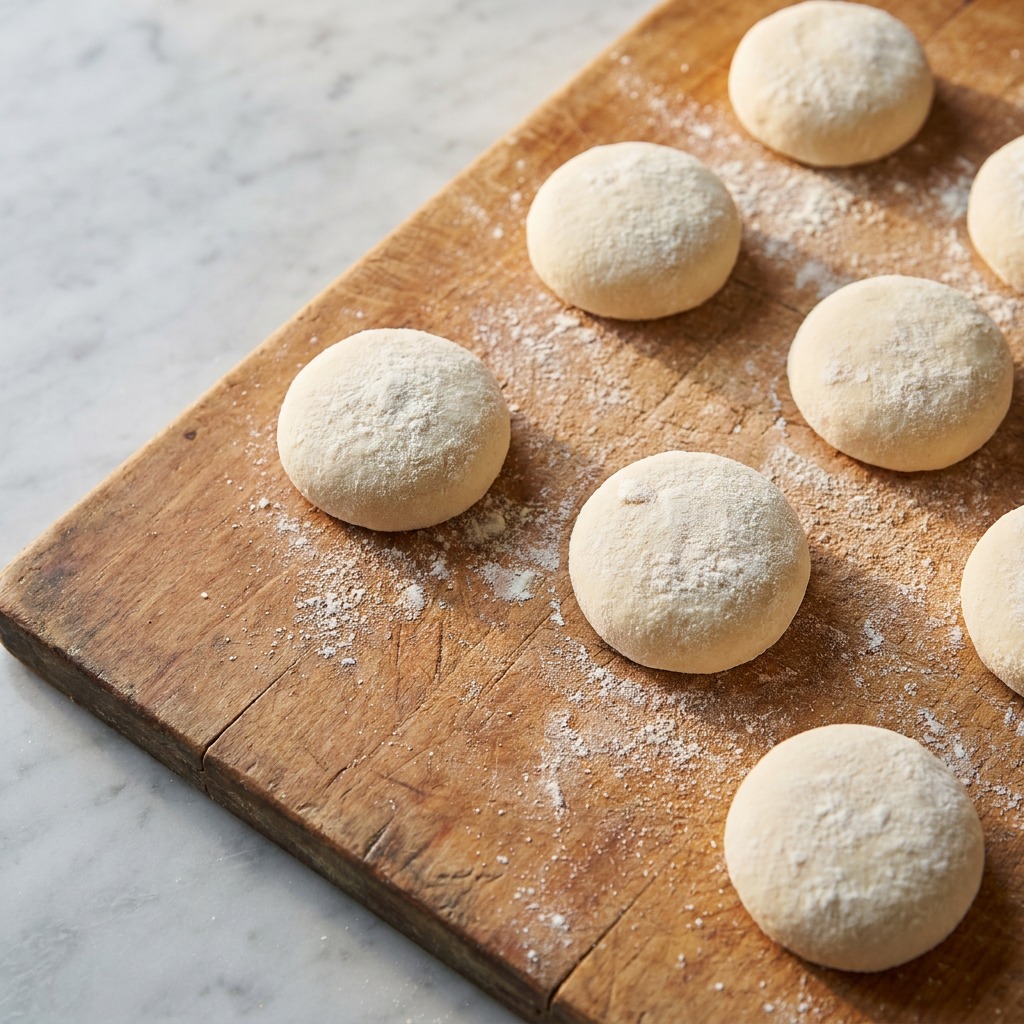
Combine flour, salt, and yeast in a large bowl. Gradually add lukewarm water (about 40°C) while mixing with chopsticks or a fork. Mix until the flour forms a shaggy dough, then add vegetable oil and knead by hand for 8-10 minutes until smooth and elastic. The dough should be slightly firm — firmer than bread dough, similar to pasta dough. Cover with a damp cloth and rest for 30 minutes at room temperature. During this time, knead it briefly once more to develop gluten.
Step 2: Braise the Pork Belly
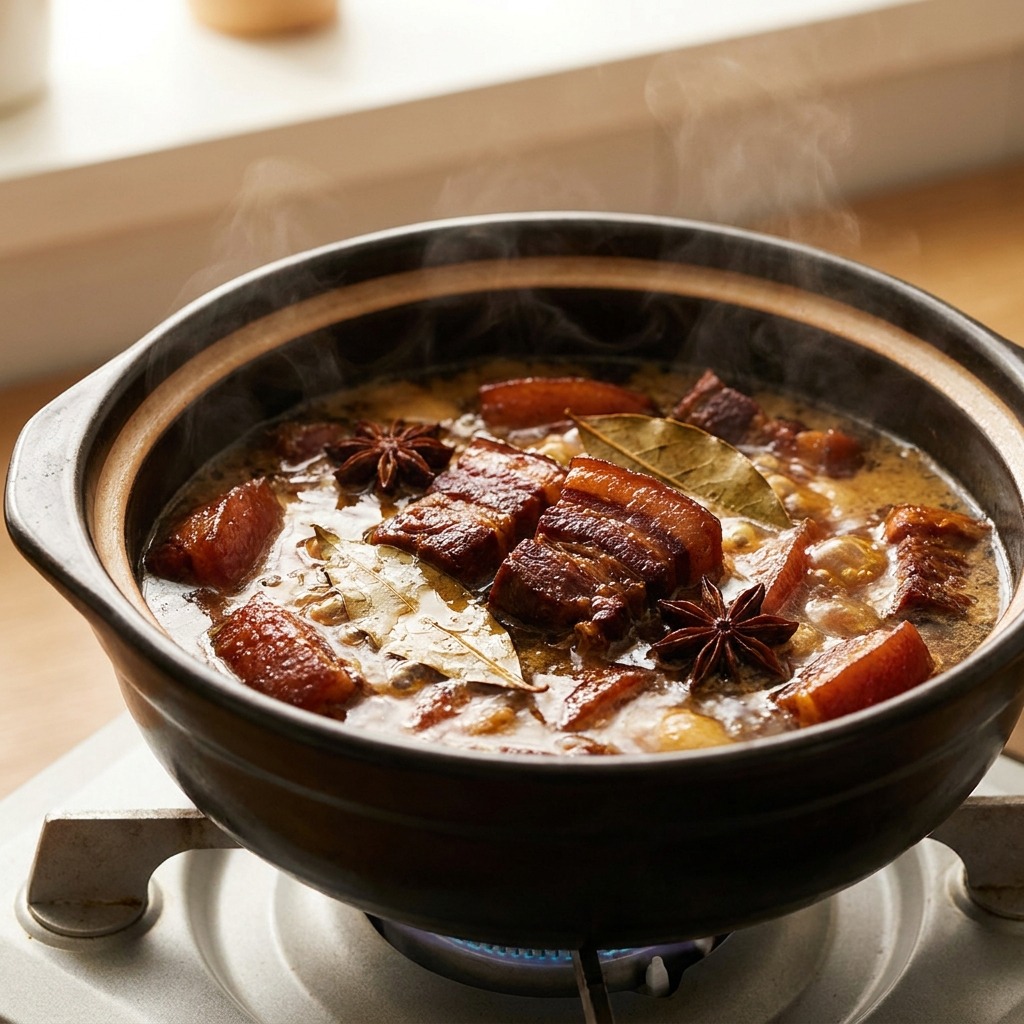
Cut pork belly into large chunks about 5cm wide. Soak in cold water for 1 hour to draw out blood, then drain. In a clay pot or Dutch oven, heat a small amount of oil over medium heat. Add rock sugar and stir constantly until it melts and turns deep amber (caramel stage) — this takes about 5 minutes. Be careful not to burn it. Add pork belly chunks and toss to coat evenly with the caramel. Add ginger, green onions, and all the spices (star anise, cinnamon, bay leaves, Sichuan peppercorns, cumin, cardamom, galangal, cloves). Stir-fry for 2 minutes until fragrant. Add soy sauce, dark soy sauce, and rice wine. Pour in enough boiling water to just cover the meat. Bring to a boil, then immediately reduce to the lowest simmer. Cover and braise for 3.5-4 hours until the pork is incredibly tender — it should offer zero resistance when pierced with a chopstick. The liquid should reduce to a thick, glossy sauce. Let the pork cool in the braising liquid for at least 2 hours (overnight is even better).
Step 3: Assemble and Serve
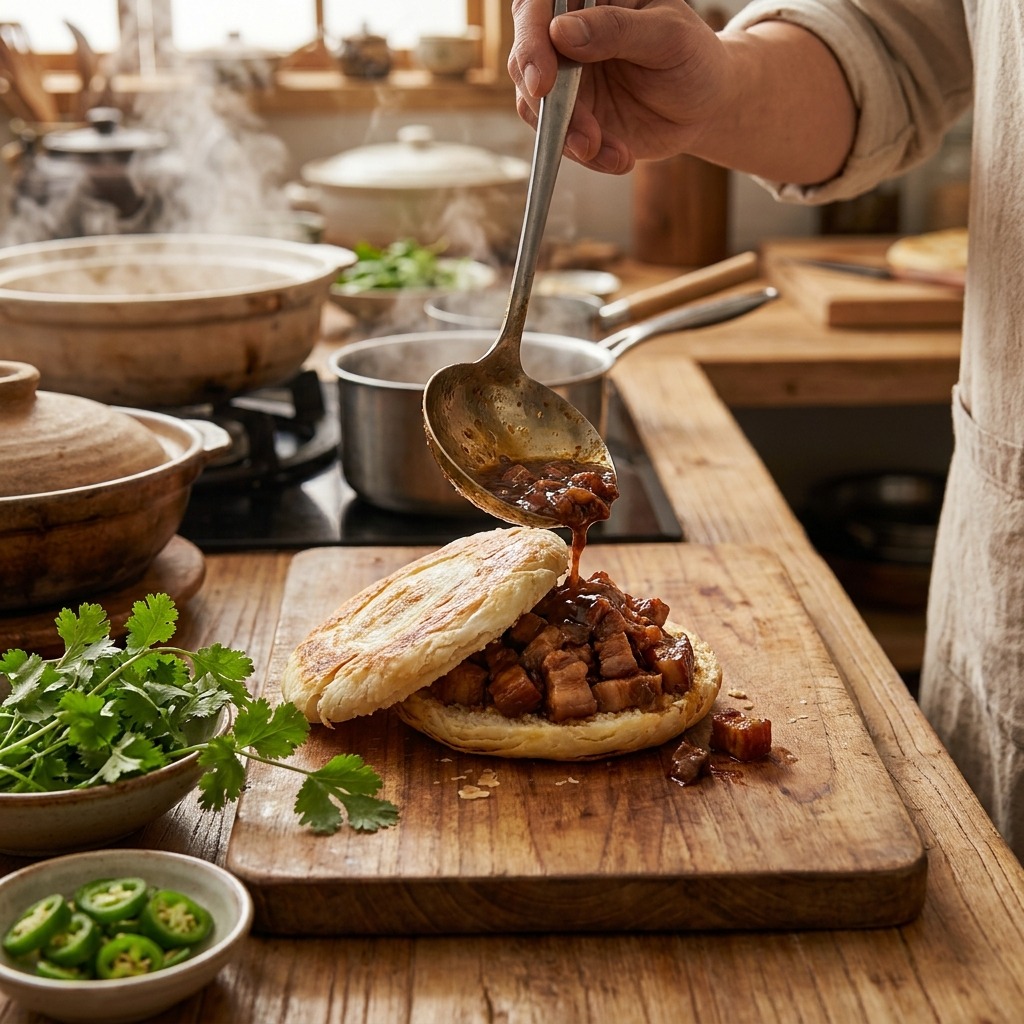
Divide the rested dough into 4 equal portions (~200g each). Roll each portion into a long oval shape about 30cm long. Fold the oval in half lengthwise, then roll it up like a scroll from one end to the other, tucking the tail underneath. Flatten gently with a rolling pin into a round cake about 1cm thick. Heat a dry flat-bottomed pan (no oil) over medium-low heat. Place each dough round in the pan and cook for 3-4 minutes per side until both sides are golden brown with a slight char. The bread should develop a crispy crust. Remove and immediately cut a deep slit along one side of each bread — don't cut all the way through. Using a cleaver or sharp knife, chop the braised pork into fine pieces directly on a cutting board, adding a few spoonfuls of the rich braising sauce as you chop. Use a spoon to scoop the chopped pork and stuff it generously into the slit you made in the bread. Optionally garnish with fresh cilantro and green chili. Serve immediately while the bread is still crispy.
Tips
- Braise overnight for best flavor: The braised pork actually tastes better the next day after sitting in its own sauce overnight in the fridge. Make the meat a day ahead if possible.
- Keep the braising liquid: Never throw away the braising sauce — strain it, refrigerate or freeze it, and reuse it as your "old broth" base. The older the broth, the more complex the flavor.
- Hot bread, cold meat: The classic way is to use freshly baked hot flatbread with meat that has cooled to room temperature. The hot bread absorbs the sauce instantly.
- 3:7 fat-to-lean ratio: When cutting pork, include a good amount of fat. The fat melts into the bread for that signature rich, unctuous flavor.
FAQ
Can I use pork shoulder instead of pork belly?
Yes, pork shoulder works well and is leaner. Look for pork with some fat marbling. Adjust braising time — shoulder may need an extra 30 minutes.
Why is my flatbread hard instead of crispy?
The pan wasn't hot enough or the dough was too soft. Make sure your dough is on the firmer side and your pan is properly preheated before adding the bread.
How long does the braised pork keep?
The braised pork keeps in the refrigerator for up to 5 days in an airtight container. The braising liquid keeps for 3 months in the freezer.
Can I make it without special spices?
Absolutely. The minimum is just star anise, ginger, and soy sauce — but the more spices you use, the more authentic and flavorful the result.