Sichuan Cold Noodles (Liang Mian)
四川凉面
Description / 简介
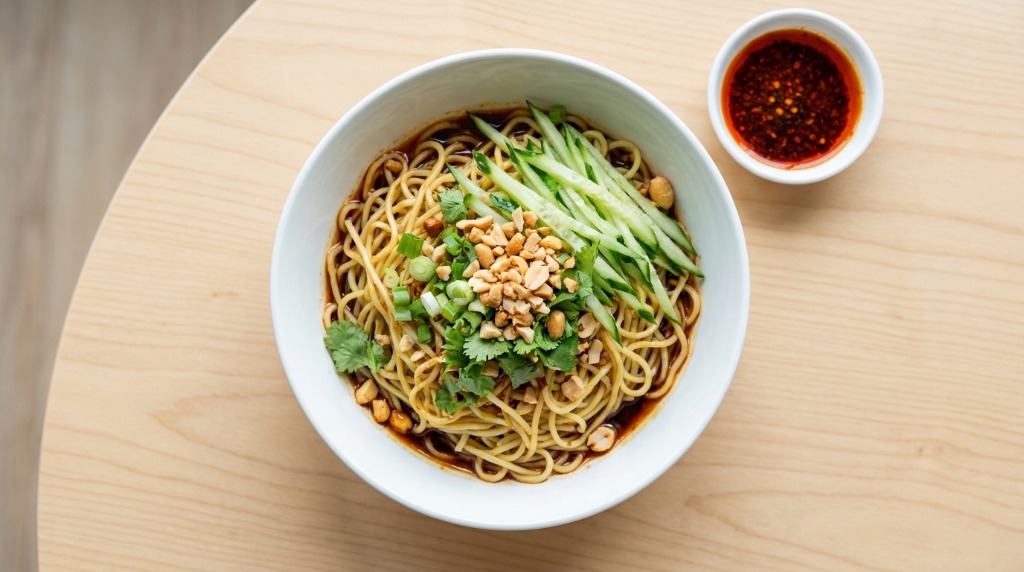
Sichuan Cold Noodles (四川凉面), known locally as Liang Mian, is one of the most refreshing and addictive Sichuan street foods — a staple of summer food stalls, family kitchens, and restaurant menus alike across Sichuan province. Unlike hot noodle dishes, these are served at room temperature or chilled, tossed in a vibrant sauce that delivers the signature "七滋八味" (seven flavors, eight aromas) of Sichuan cuisine. The sauce is a masterclass in balance: the heat of chili oil, the tongue-tingling mala o
Ingredients / 食材
Thin wheat noodles 200g (angel hair pasta or soba also works)
Cucumber 1 medium (julienned into thin strips)
Roasted peanuts 30g (roughly crushed)
Garlic 3 cloves (minced into paste)
Scallions 2 stalks (finely chopped)
Cilantro 10g (roughly chopped, optional)
Sesame oil 1 tbsp
Chili oil with sediment 2 tbsp (see Tips)
Light soy sauce 1.5 tbsp
Chinese black vinegar (Balsamic Zhenjiang style) 1.5 tbsp
Sesame paste or tahini 1 tsp
Sugar 1 tsp
Sichuan peppercorn powder 1/4 tsp
Salt 1/2 tsp
Instructions / 制作过程
Step 1: Cook and Cool the Noodles
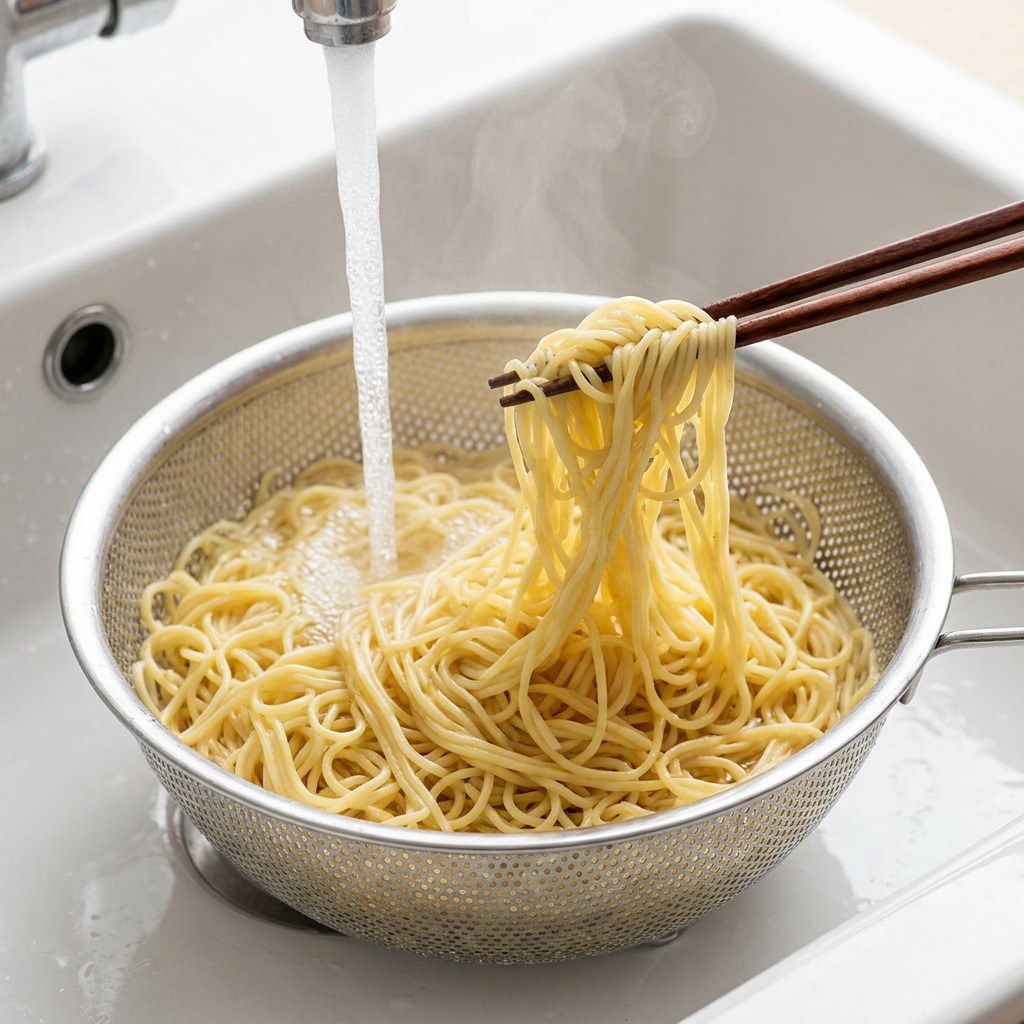
Bring a large pot of water to a rolling boil. Add the noodles and cook according to package instructions until al dente — slightly firm with a tiny white core remaining, usually 1-2 minutes less than fully cooked. Drain immediately and rinse under cold running water until completely cool. This stops the cooking and prevents the noodles from becoming mushy. Shake off excess water thoroughly. Drizzle with sesame oil and toss gently to prevent the noodles from sticking together. Set aside to cool to room temperature.
Step 2: Make the Sichuan Sauce
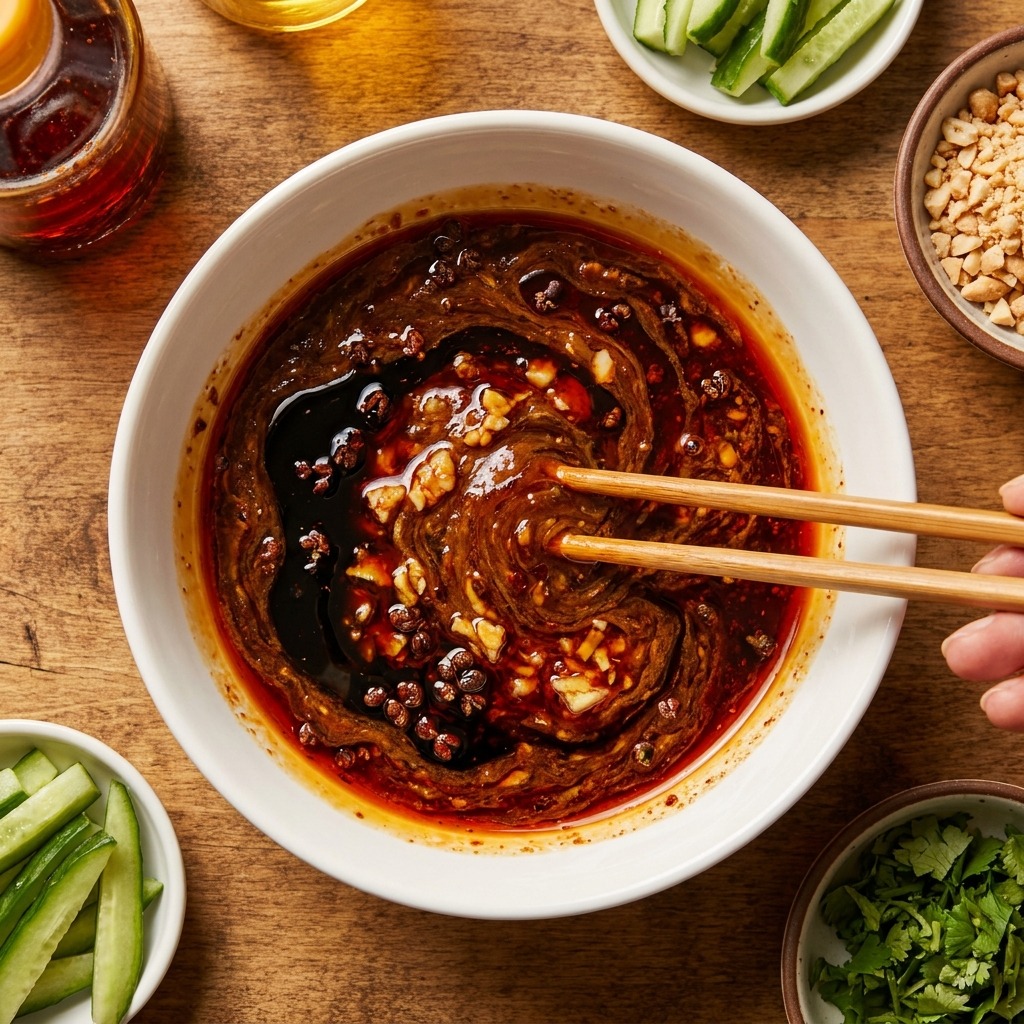
In a small bowl, combine minced garlic paste, light soy sauce, Chinese black vinegar, sesame paste, sugar, Sichuan peppercorn powder, and salt. Stir well until the sugar and sesame paste dissolve. Add the chili oil (including the red sediment at the bottom — this is where the flavor is!) and stir until fully combined into a smooth, glossy sauce. The sauce should be a rich reddish-brown color. Taste and adjust: add more vinegar for tang, more soy sauce for salt, or more chili oil for heat.
Step 3: Assemble and Toss
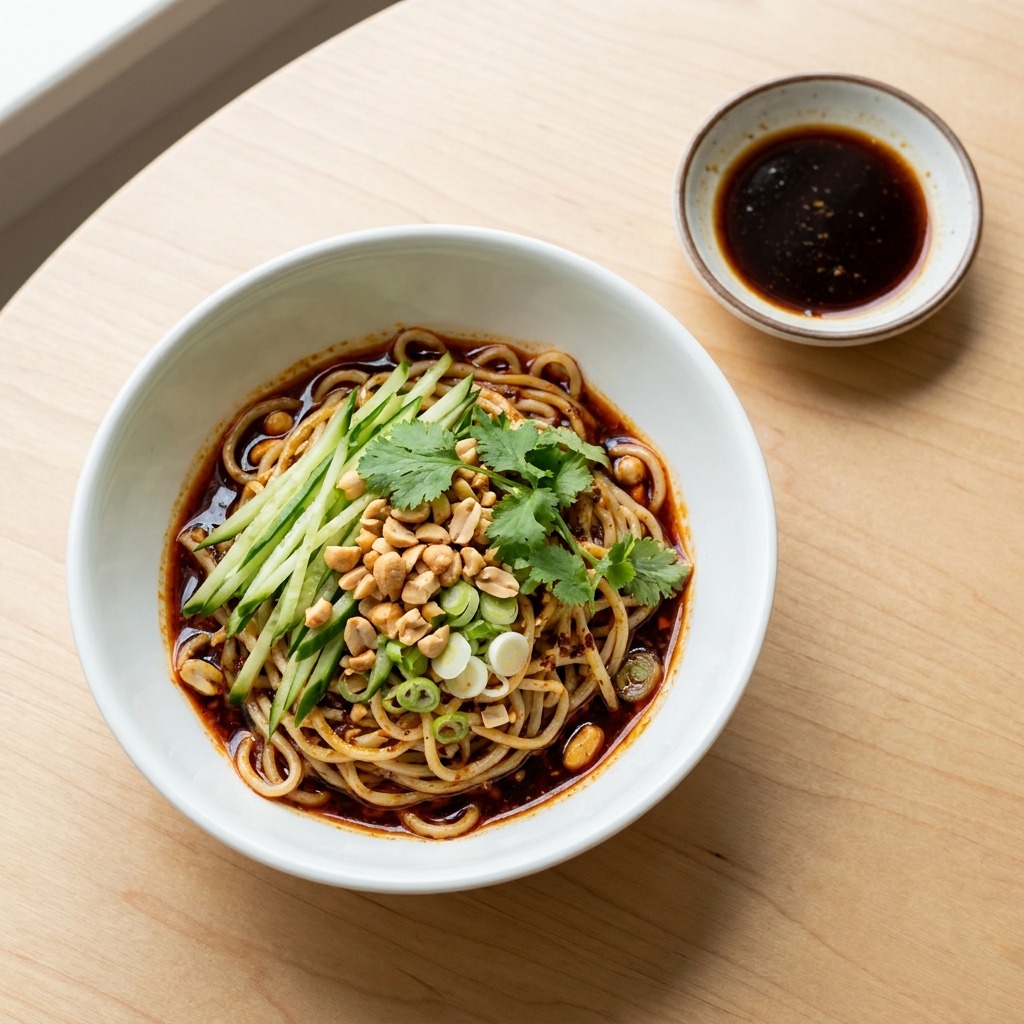
Place the cooled noodles in a large serving bowl. Pour the sauce over the noodles. Using chopsticks or tongs, toss and lift the noodles vigorously for 2-3 minutes, making sure every strand is evenly coated in the spicy sauce. The noodles should turn a uniform glossy red-orange. Add the julienned cucumber and half the crushed peanuts, then toss again briefly. Transfer to individual bowls. Top with the remaining crushed peanuts, scallions, and cilantro. Serve immediately at room temperature, or cover and refrigerate for up to 2 hours before serving — the noodles will absorb the sauce and taste even better.
Tips
- Chili oil with sediment matters: Don't discard the red paste that settles at the bottom of your chili oil jar — this "辣椒油底" is the most flavorful part. Always stir it into the sauce.
- Noodles are the canvas: Whatever noodle you choose, make sure to rinse them completely cold and shake dry. Warm noodles will turn mushy and the sauce won't cling properly.
- Make the sauce fresh each time: The sauce is best made just before serving. Garlic in the sauce loses its punch if sitting for more than 30 minutes.
- Cucumber is essential: It adds cool crunch that balances the spicy sauce. Don't skip it — it makes the whole dish refreshing.
- The Sichuan peppercorn makes it authentic: If you can't find Sichuan peppercorn powder, toast whole peppercorns in a dry pan for 2 minutes, then grind in a spice grinder.
FAQ
What noodles work best?
Angel hair pasta (capellini) is closest to restaurant-style Sichuan noodles. Soba noodles add a nutty flavor and work well for a healthier version. Rice vermicelli is lighter and gluten-free.
Can I make it ahead?
Cook and cool the noodles up to 1 day ahead, toss with sesame oil, and refrigerate. Make the sauce fresh. Toss together just before serving.
Is it very spicy?
The heat level is moderate but noticeable — the Sichuan peppercorn adds a "numbing" sensation rather than just heat. Reduce the chili oil to 1 tbsp for a milder version.
What if I can't find Chinese black vinegar?
Italian balsamic or rice vinegar with a pinch of sugar works as a substitute. The tanginess profile will differ slightly.