Chongqing Xiaomian
重庆小面
Description / 简介
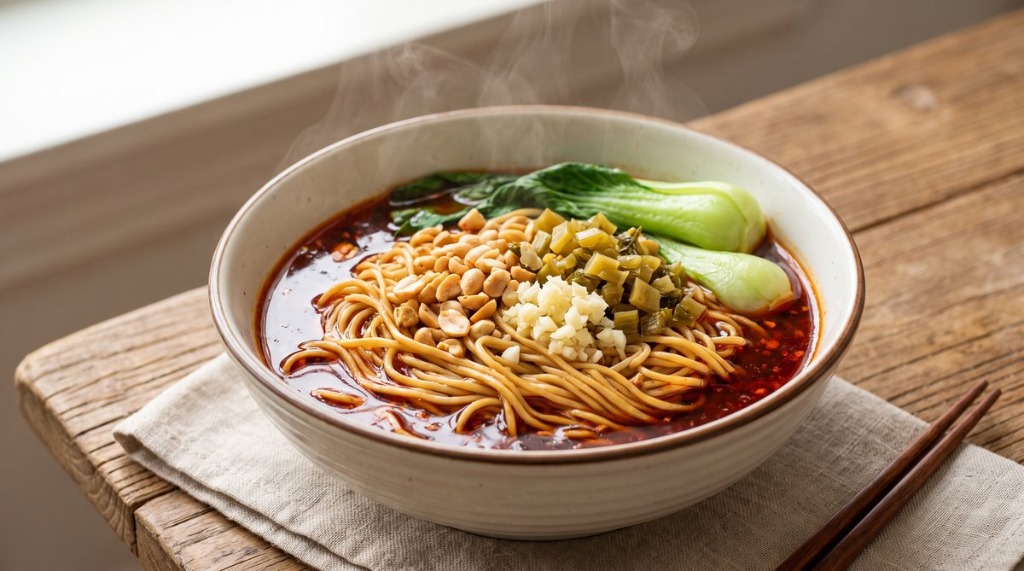
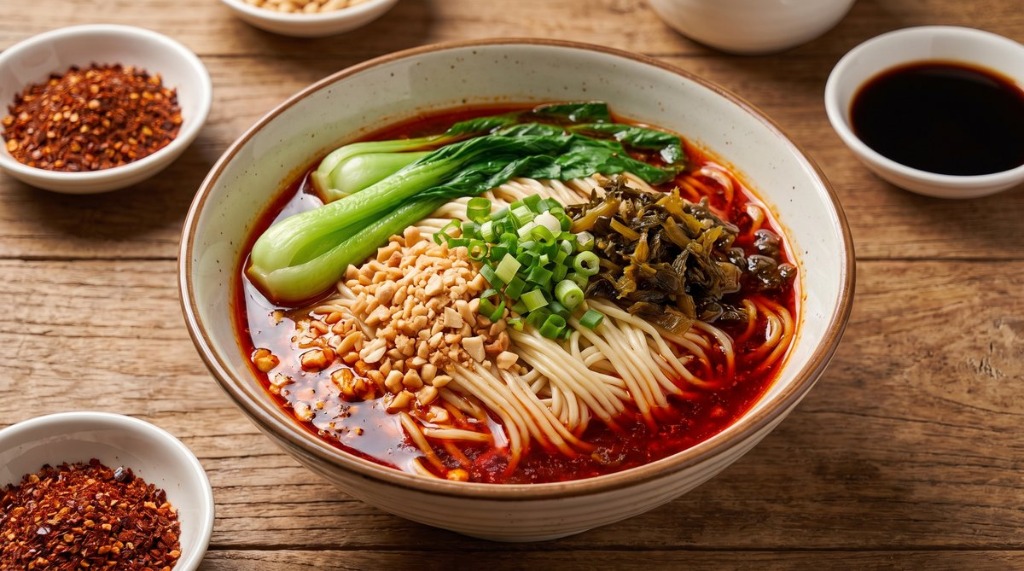
Chongqing Xiaomian (重庆小面) is the iconic street food of China's mountain city — a deceptively simple bowl of noodles bathed in a glossy, fiery red chili oil sauce that delivers the unmistakable punch of Sichuan pepper and the richness of lard. This home-friendly recipe distills the street-stand experience into an approachable format without sacrificing an ounce of authenticity.
Ingredients / 食材
Alkaline noodles (fresh or dried) 300g
Bok choy or water spinach 100g
Pork lard or neutral oil 1 tbsp
Light soy sauce 2 tbsp
Chinese black vinegar 1 tbsp
Chili oil (store-bought or homemade) 2 tbsp
Sichuan pepper powder 1 tsp
Garlic 10g (minced into paste)
Scallions 15g (chopped)
Pickled mustard greens (zhacai) 30g (chopped)
Roasted peanuts 20g (roughly crushed)
White sesame seeds 5g
Sugar 3g
Salt 3g
Chicken powder or broth 1 tsp (optional)
Noodle cooking water 300ml
Instructions / 制作过程
Step 1: Mix the Sauce Base
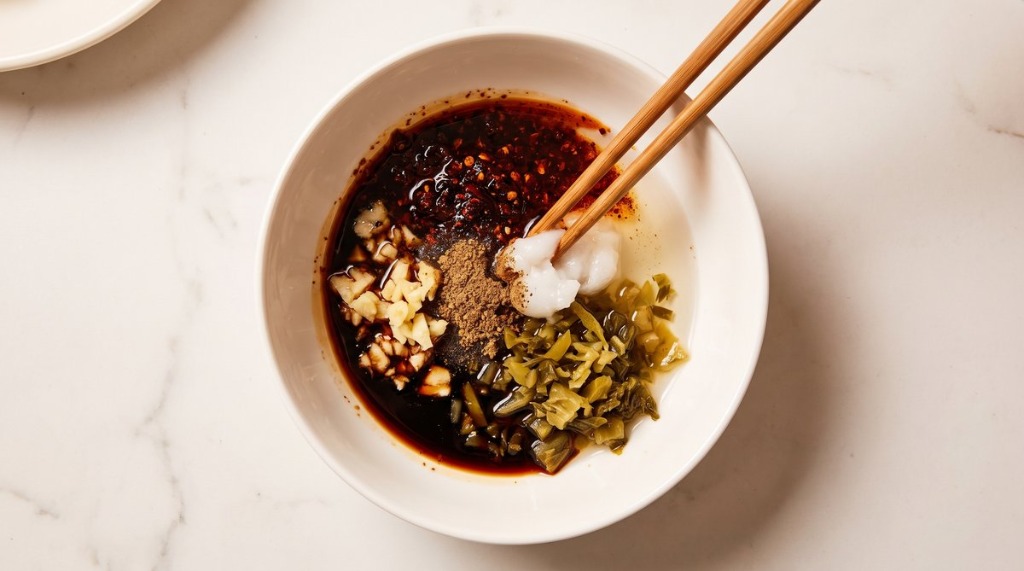
In a large serving bowl, combine the sauce base ingredients: minced garlic paste, chopped pickled mustard greens, Sichuan pepper powder, sugar, light soy sauce, Chinese black vinegar, chili oil, pork lard (or neutral oil), and optional chicken powder. Stir everything together until evenly mixed. The lard will melt slightly from the residual warmth, coating each seasoning and creating a fragrant base. Set the bowl aside — this is where the noodles will rest and absorb all the flavors.
Step 2: Cook the Noodles and Vegetables
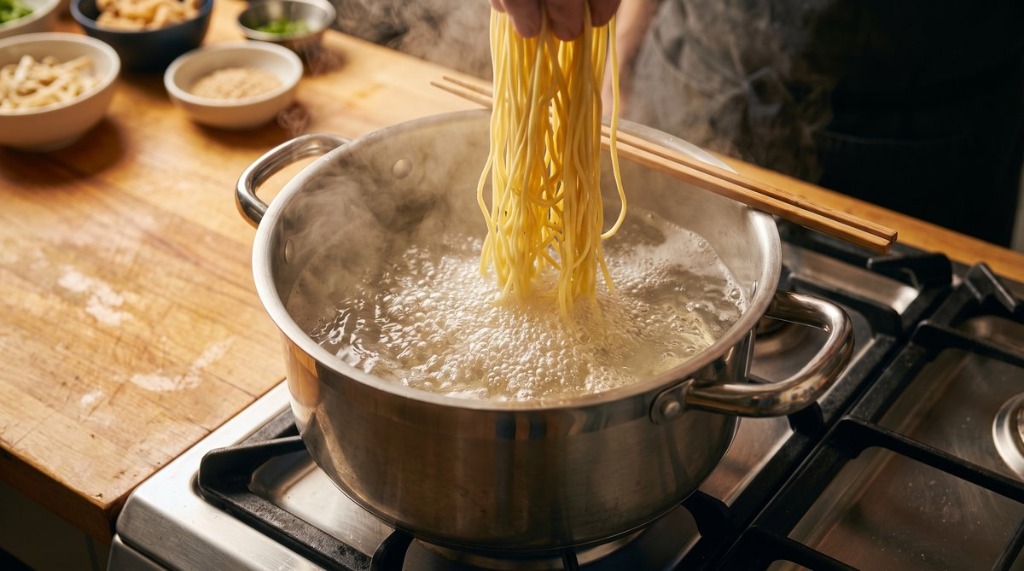
Bring a large pot of water to a vigorous boil. Add the alkaline noodles and cook for 2–3 minutes (fresh noodles) or 4–5 minutes (dried), stirring occasionally to prevent sticking. In the last 30 seconds, add the bok choy or water spinach and blanch until just tender — they should stay bright green and slightly crisp. Using tongs or a spider strainer, drain everything well, reserving a ladleful (about 300ml) of the starchy cooking water.
Step 3: Combine Noodles and Broth
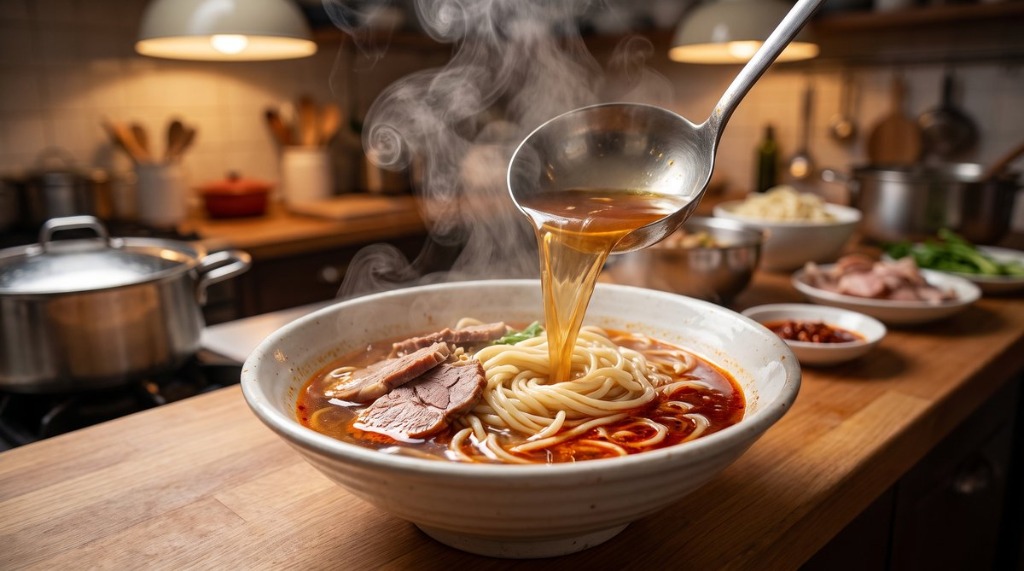
Pour the reserved hot noodle cooking water directly into the bowl with the sauce base — this "冲" (poured broth) step is essential as it wakes up all the seasonings and creates the signature soup. Stir the broth into the sauce vigorously for a few seconds. Immediately add the drained noodles and blanched greens on top. Toss everything together thoroughly with chopsticks, making sure every strand of noodle is coated in the glossy red sauce.
Step 4: Garnish and Serve
Top the dressed noodles generously with crushed roasted peanuts, chopped scallions, and a sprinkle of white sesame seeds. For extra flavor and texture, add a few extra drops of chili oil or a pinch of Sichuan pepper powder. Serve immediately while piping hot — the noodles will continue to absorb the sauce, so eat it fast and enjoy the full burst of Chongqing's legendary麻辣 (málà) flavor.
Tips
- Lard is non-negotiable. It is the secret weapon of authentic Chongqing Xiaomian — it adds richness, helps the sauce cling to noodles, and tempers the heat of the chili oil. If you are avoiding pork, neutral oil works but the flavor will be noticeably different.
- Sichuan pepper must be fresh-ground. Pre-ground powder loses its numbing aroma quickly. If possible, grind whole Sichuan peppercorns in a spice grinder just before using for maximum "麻" (numbing) effect.
- Do not overcook the noodles. They should be just past al dente — the cooking continues in the hot broth, and overdone noodles will turn mushy in the sauce.
- Customize your spice level. Chongqing locals have "三挑" (three choices): dry style (干溜) without broth, wet style with broth, and adjustable spice. Start with the quantities listed and adjust up or down to your preference.
FAQ
Can I use regular spaghetti or instant noodles instead of alkaline noodles?
Yes, but the texture will differ. Alkaline noodles have a distinctive springy bite and better sauce-clinging ability. If using dried spaghetti, cook it 1 minute less than the package says for al dente.
What if I cannot find pickled mustard greens (zhacai)?
Kimchi, salted vegetables, or even finely chopped dill pickles work as a crunchy, salty substitute. The key is something briny and crunchy to contrast the soft noodles.
Can I make this ahead?
The sauce base (without noodles) can be prepped and stored in the fridge for up to 3 days. Cook noodles fresh when ready to serve — Xiaomian is fundamentally a fast, last-minute assembly dish.
Is this very spicy?
The amounts of chili oil and Sichuan peppercorns are moderate, delivering a balanced level of heat with a characteristic numbing-spicy sensation. For a milder flavor, halve the quantities of both ingredients; to experience the intense, explosive heat typical of Chongqing-style spice, double the amounts.