Xinjiang Dapanji
新疆大盘鸡
Description / 简介
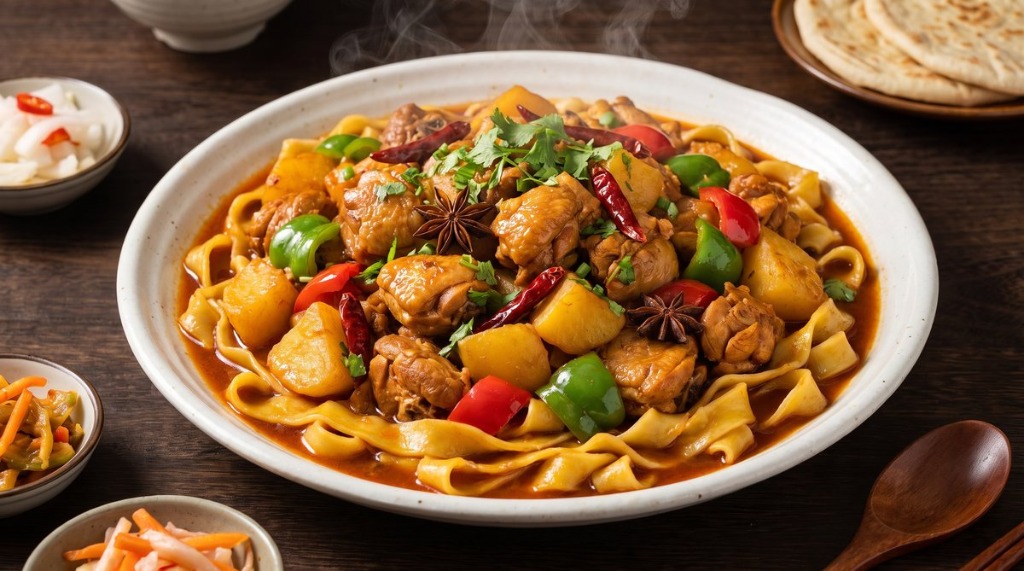
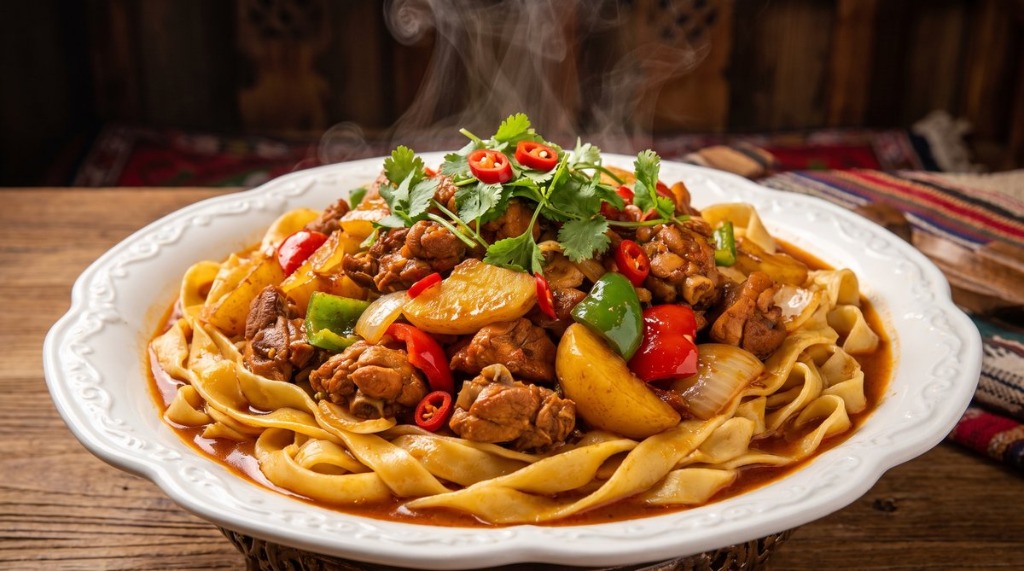
Xinjiang Dapanji (新疆大盘鸡) — literally "Xinjiang Big Plate Chicken" — is the legendary Silk Road dish born in the truck stops of Shawan County in the 1980s. It is a magnificent one-wok wonder: chunks of tender braised chicken, soft yielding potatoes, and crisp-tender peppers swimming in a rich, glossy reddish-brown sauce that is at once spicy, slightly sweet, and deeply savory.
Ingredients / 食材
Whole chicken (cut into 4cm pieces) 800g
Yellow-fleshed potatoes 400g (cut into 3cm chunks)
Green bell pepper 100g (roughly chopped)
Red bell pepper 100g (roughly chopped)
Yellow onion 80g (roughly chopped)
Garlic 20g (smashed)
Fresh cilantro 10g (for garnish)
Vegetable oil 60ml
Pixian broad bean paste (豆瓣酱) 30g
Wusu beer (or any pale lager) 500ml
Light soy sauce 20ml
Dark soy sauce 10ml
Rock sugar 15g (for caramelizing)
Dried Sichuan chilies 15g (soaked in warm water)
Sichuan peppercorns 5g
Star anise 2 pieces
Bay leaves 2
Cinnamon stick 1 small piece
Ginger 15g (sliced)
Salt 8g
White pepper powder 3g
All-purpose flour 250g
Water 120ml
Salt 2g
Vegetable oil 10ml (for resting)
Instructions / 制作过程
Step 1: Brown the Chicken with Caramelized Sugar
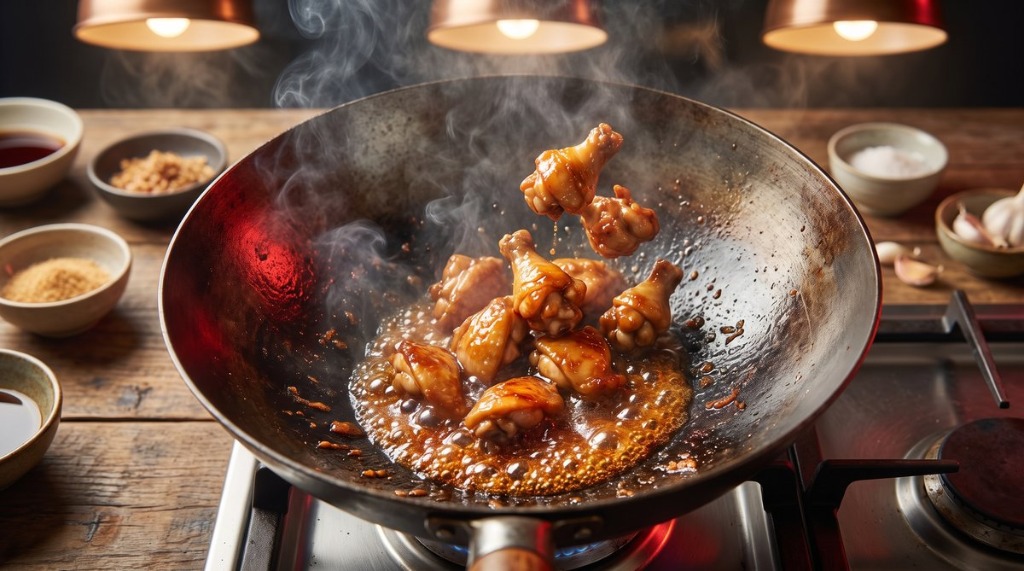
Pat the chicken pieces dry with paper towels. Heat vegetable oil in a large wok or heavy-bottomed pot over medium heat. Add the rock sugar and stir constantly, melting it slowly until it turns a deep amber color and small bubbles appear — this is your caramel. Immediately add the chicken pieces and toss vigorously to coat every piece in the glossy caramel. Keep stir-frying over high heat for 3–4 minutes until the chicken turns golden brown on all sides. The sugar locks in moisture and creates a beautiful sear. Remove the chicken and set aside, leaving the oil and caramel residue in the wok.
Step 2: Stir-Fry the Aromatics and Spices
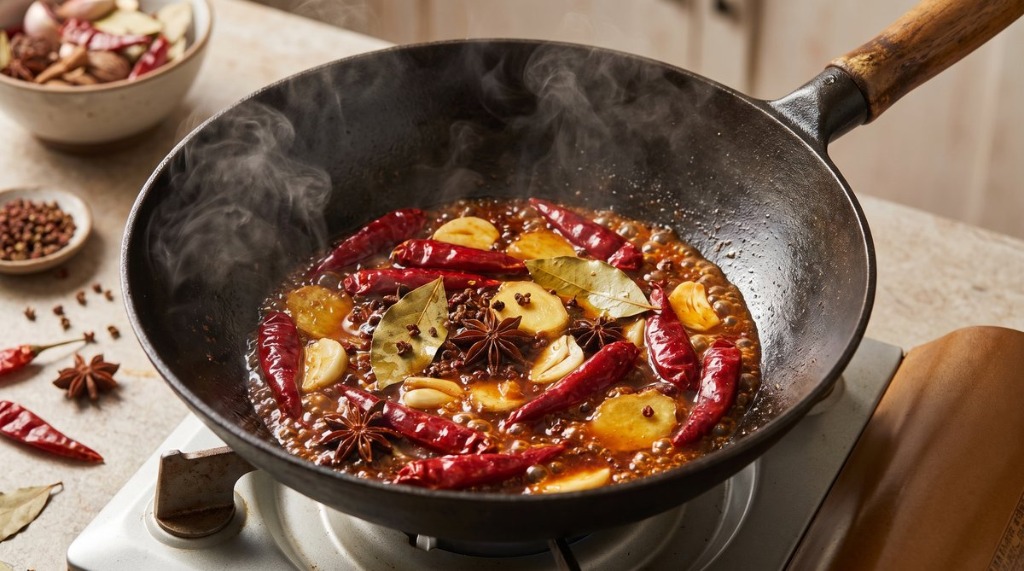
In the same wok with the remaining oil and caramel, increase heat to high. Add ginger slices, smashed garlic, and dried chilies (drained from soaking water) first and stir-fry for 30 seconds until fragrant. Add the Sichuan peppercorns, star anise, bay leaves, and cinnamon stick and stir-fry for another 20 seconds. Push everything to the side, add the Pixian broad bean paste to the center of the wok, and stir-fry it alone for 30 seconds to cook off the raw taste and release its deep red color. Then mix everything together and add the light and dark soy sauces, letting them sizzle in the hot oil.
Step 3: Braise with Beer and Add Potatoes
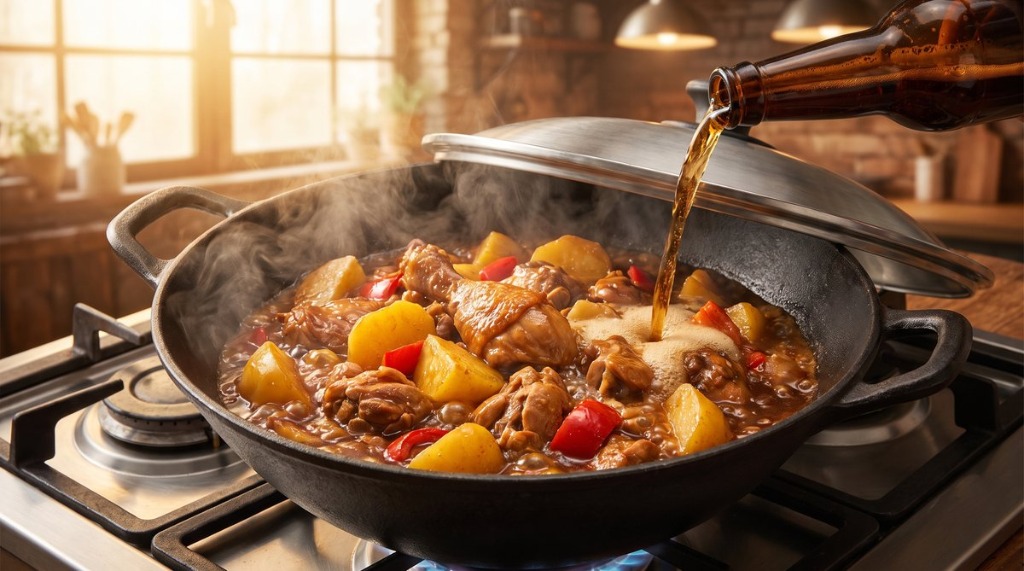
Pour the entire bottle of beer into the wok — the liquid should just cover the chicken pieces. Bring to a vigorous boil over high heat, scraping up any caramelized bits from the bottom. Return the browned chicken to the wok, reduce heat to medium-low, cover with a lid, and braise for 20 minutes. After 20 minutes, add the potato chunks, pushing them into the braising liquid. Cover again and continue braising for another 15 minutes until the potatoes are tender and beginning to dissolve at the edges, thickening the sauce naturally.
Step 4: Finish with Peppers, Noodles, and Serve
Add the green and red bell peppers and yellow onion to the wok, stir everything together, and cook uncovered over medium-high heat for 2–3 minutes until the peppers soften slightly but still hold their color. Taste and adjust seasoning with salt and white pepper. The sauce should be glossy and thick enough to coat a spoon. While the peppers cook, bring a separate pot of water to a boil and cook the belt noodles (or wide noodles) until just al dente. Drain and divide among large serving plates or one big communal platter. Spoon the hot braised chicken, potatoes, and sauce over the noodles. Garnish with fresh cilantro and serve immediately. Mix the noodles through the sauce at the table for the full experience.
Tips
- Use beer — not water. The beer is the signature of Xinjiang Dapanji: its natural sugars caramelize during braising, its acidity tenderizes the chicken, and its yeasty aroma adds a layer of depth that water simply cannot replicate. Any pale lager works; Wusu is the authentic choice.
- Brown the sugar carefully. The difference between perfect caramel and bitter burnt sugar is about 10 seconds. Remove from heat as soon as the sugar turns deep amber with small bubbles — it will keep cooking in the residual heat.
- Do not rush the braising. The 35-minute covered braise is what transforms tough chicken into fall-off-the-bone tenderness and turns raw potatoes into silky, sauce-absorbent pillows. Keep the heat at a gentle simmer.
- Make the belt noodles while the chicken braises. Prepare the noodles during step 3 so everything is ready at the same time — Dapanji waits for no one.
FAQ
Can I substitute other parts of the chicken?
Yes — drumsticks and thighs work especially well and stay juicy. Breast meat can dry out, so if using it, reduce braising time to 15 minutes and add it last.
What can I use instead of Pixian broad bean paste?
Sichuan chili bean paste (郫县豆瓣酱) is the most authentic choice. In a pinch, gochujang (Korean chili paste) gives a similar umami depth, though the flavor profile shifts slightly.
Can I make this ahead?
Yes — braise the chicken without the peppers and noodles, refrigerate for up to 2 days, and reheat before adding peppers and cooking fresh noodles just before serving.
Is this very spicy?
It has moderate heat from the dried chilies. Reduce the amount by half for a mild version, or omit the Sichuan peppercorns if you want no numbing sensation.