Mapo Tofu
麻婆豆腐
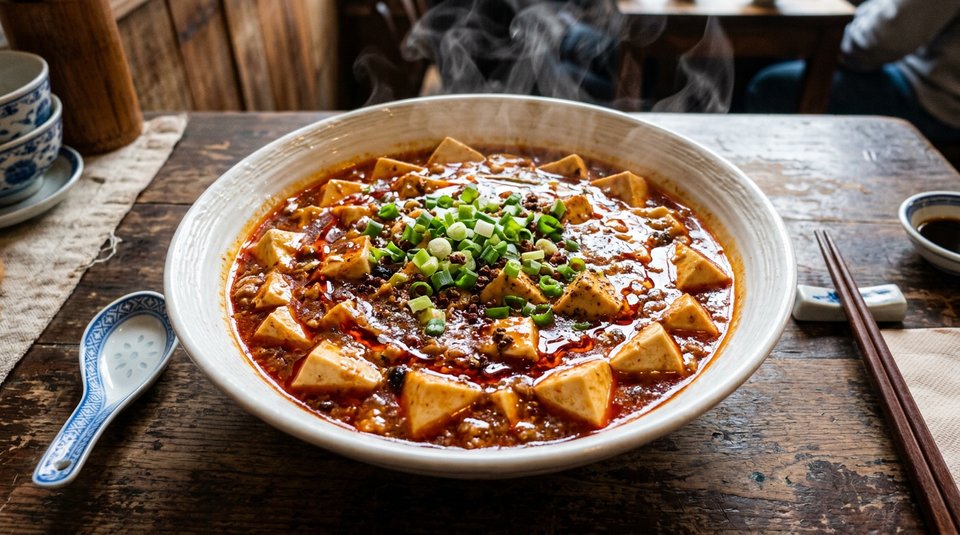
Description / 简介
Mapo Tofu (麻婆豆腐) is the fiery, soul-warming heart of Sichuan cuisine a dish born in Chengdu in the 1860s, reportedly created by a restaurant run by a woman nicknamed "Pockmarked Liu" () whose husband made the finest tofu in the city. The dish is a masterclass in the Sichuan philosophy of balanced flavors: the deep, fermented earthiness of Pixian doubanjiang, the tongue-tingling numbing of Sichuan peppercorns, the mouth-watering heat of dried chilies, and the silky, trembling softness of si
Ingredients / 食材
Silken or soft tofu 400g (1 block)
Ground pork 100g (or ground beef)
Pixian doubanjiang () 30g (2 tbsp)
Sichuan peppercorns 5g (about 1520 whole peppers)
Dried chilies 5g (46 pieces, roughly chopped)
Garlic 10g (2 cloves, minced)
Ginger 5g (1 tsp, minced)
Green onions 15g (2 stalks, chopped; white and green parts separated)
Soy sauce 10ml (1 tbsp)
Rice wine or Shaoxing wine 10ml (1 tbsp)
Sugar 3g (1/2 tsp)
Sesame oil 3ml (1 tsp)
Potato starch 10g (1 tbsp, mixed with 3 tbsp water)
Neutral cooking oil 30ml (2 tbsp)
Salt 2g
White pepper powder 1g
Scarlet pepper oil () 10ml (for garnish, optional)
Instructions / 制作过程
Step 1: Prepare the Tofu and Ingredients
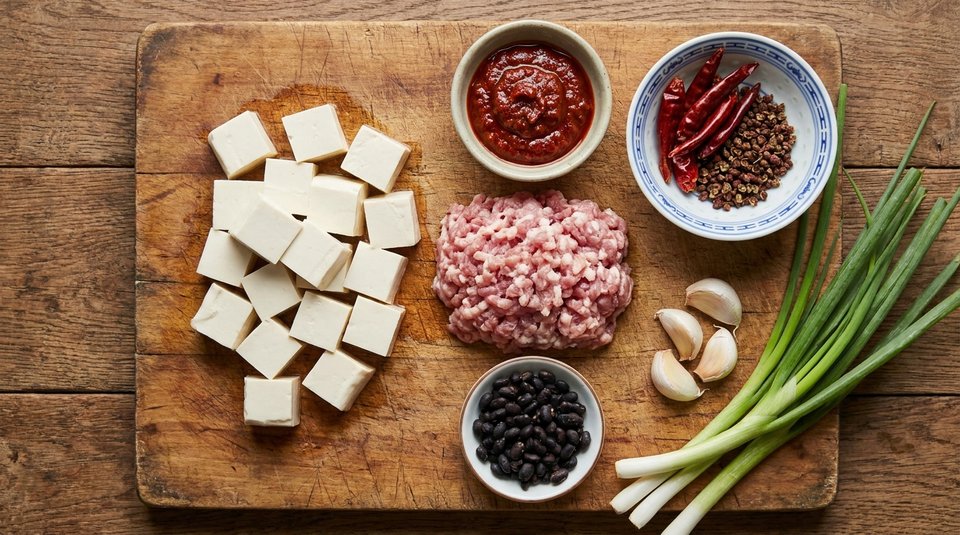
Cut the silken tofu into 2cm cubes too small and they'll, too large and they won't absorb the sauce. Bring a pot of water to a gentle boil with a pinch of salt. Carefully lower the tofu cubes into the boiling water and blanch for 2 minutes to firm them up slightly and remove any beany odor. Use a slotted spoon to transfer the tofu to a bowl, leaving it in the warm water off the heat while you prepare the other ingredients. In a small bowl, mix the potato starch with 3 tablespoons of cold water and stir until smooth this is your slurry for thickening the sauce. Separate the green onions: finely chop the white parts (for cooking) and slice the green parts thinly (for garnish).
Step 2: Fry the Meat and Build the Base
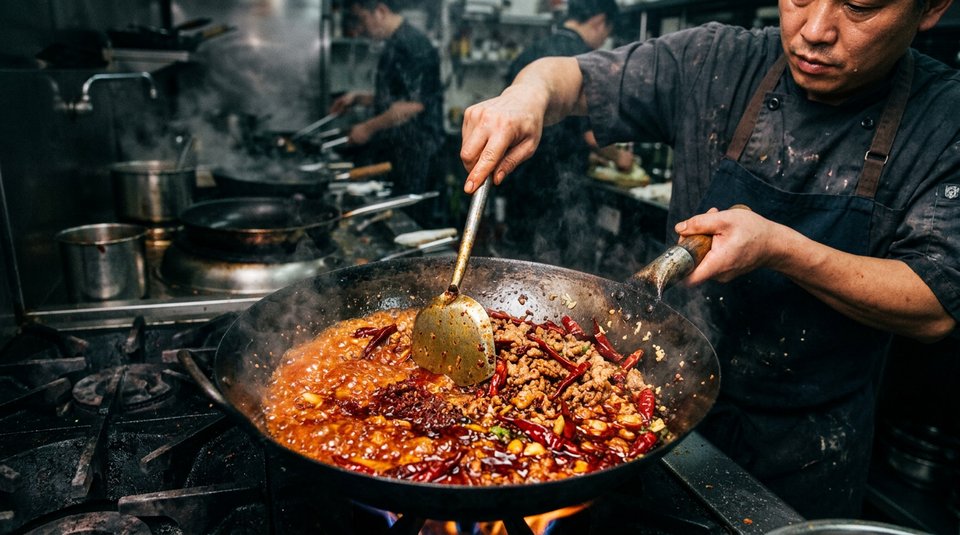
Heat 30ml of oil in a wok over medium-high heat until shimmering. Add the ground pork and stir-fry until it changes color and releases its fat, breaking it into small pieces with your spatula. Push the pork to the side and add the doubanjiang to the hot oil in the center. Stir-fry the doubanjiang for 23 minutes over medium heat, pressing and folding it continuously until the oil turns a deep, glowing red and the paste is fragrant and slightly darkened. This step is essential undercooked doubanjiang tastes raw and flat; properly fried doubanjiang is rich, complex, and deeply savory. Add the dried chilies and Sichuan peppercorns and stir for 30 seconds. Then add the minced garlic and ginger (white onion parts) and stir-fry for another 30 seconds until fragrant.
Step 3: Add the Tofu and Simmer
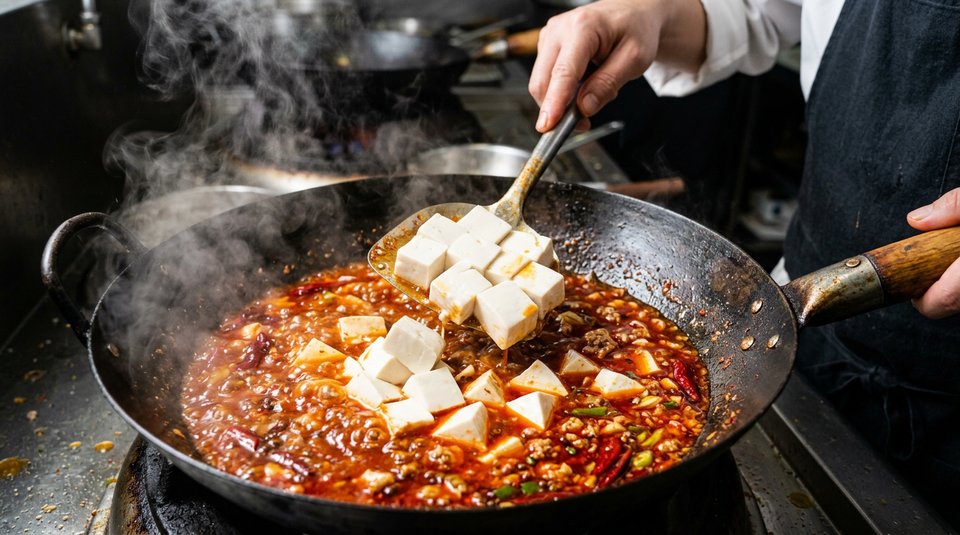
Lift the tofu cubes gently from their water bath and slide them into the wok using a large spatula don't drop them in or they'll. Pour in 200ml of water (or light chicken stock), soy sauce, rice wine, and sugar. Gently shake the wok in a circular motion to distribute the tofu without breaking it never stir tofu with a spatula as this will it. Bring to a boil over medium heat, then reduce to a gentle simmer. Cook for 34 minutes, allowing the tofu to absorb the spicy, savory sauce from below. The tofu should be heated through and beginning to swell slightly with flavor.
Step 4: Thicken with Starch Slurry
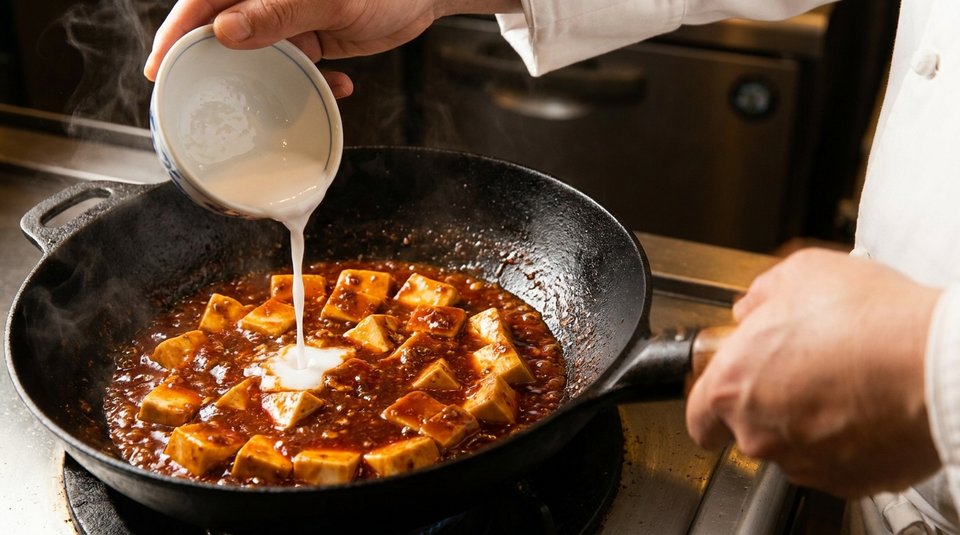
Give the starch slurry a quick stir (it settles quickly). Pour it into the wok in two or three additions while gently shaking or tilting the wok not stirring with a spatula. Each addition will cause the sauce to thicken noticeably. Wait 1520 seconds between additions to let the sauce fully absorb each layer of starch. The sauce should reach a thick, glossy consistency that coats the back of a spoon it should cling to the tofu cubes rather than pooling at the bottom of the wok. Drizzle in the sesame oil and give one final gentle shake.
Step 5: Plate and Garnish
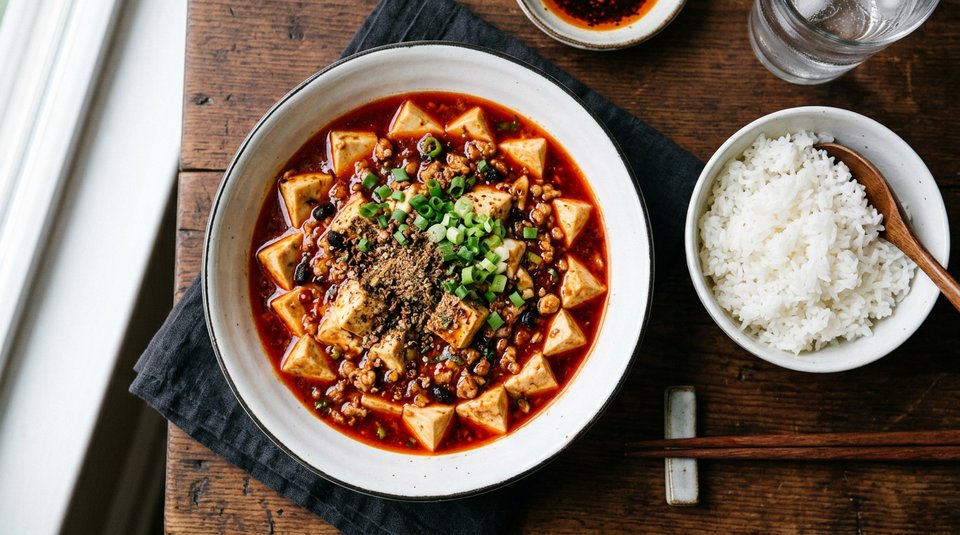
Use a wide spatula to gently transfer the tofu to a deep serving bowl, keeping the pieces intact and the sauce on top. The tofu should be surrounded by the glossy red sauce with visible pieces of doubanjiang, chilies, and peppercorns. Scatter the reserved green onion slices over the top. For an extra layer of numbing heat and visual appeal, drizzle a thin stream of scarlet pepper oil () in a spiral over the surface this adds a glossy sheen and a powerful finishing kick of spice. Serve immediately over steamed white rice, with extra rice on the side.
Tips
- Use Pixian doubanjiang (): This specific brand from Chengdu is the soul of the dish it has a deeper, more complex fermentation than other doubanjiang. Don't substitute with generic chili sauce or sweet bean paste.
- Never stir tofu with a spatula: Tofu is delicate shaking the wok or using a gentle motion is the only way to move it without breaking. If you must use a tool, hold it flat and very gently push under the tofu.
- Bloom the peppercorns in oil first: Adding Sichuan peppercorns directly to the sauce without blooming them first results in muted, uneven numbness. Frying them briefly in hot oil releases their aromatic oils and maximizes the tongue-tingling effect.
- Make it saucier: For a saucier, more banquet-style version, double the doubanjiang and add 1 tablespoon of fermented black bean sauce () along with the garlic and ginger.
FAQ
Can I use firm tofu instead of silken tofu?
Yes, firm or medium-firm tofu works, though the texture will be less silky and the sauce won't penetrate as deeply. Silken () is the traditional choice if you can find it, it's worth the extra care in handling.
How do I make this vegetarian / vegan?
Replace the ground pork with an equal amount of finely crumbled firm tofu (pressed and crumbled), or use mushrooms finely minced. The flavor will be slightly different but still delicious. Omit the lard if using.
My sauce is too spicy. How do I tone it down?
Reduce the dried chilies and doubanjiang by half the doubanjiang provides most of the heat. You can also add a teaspoon of sugar to the sauce to balance the spice rather than mask it.
Can I make mapo tofu in advance?
It is best served immediately the tofu absorbs the sauce rapidly and can become oversaturated and fall apart if left to sit. If reheating, do so very gently over low heat and add a splash of water to loosen the sauce.
What's the difference between mapo tofu and regular tofu in chili sauce?
The defining difference is the combination of doubanjiang + Sichuan peppercorns. Without one or both of these or without the numbing () quality it's not true mapo tofu. Regular "tofu with chili sauce" lacks the signature mouth-numbing and tongue-tingling complexity.